
SCHD & QQQ: The New 60-40 Portfolio (Bitcoin & Gold Edition)
US government policies have broken the traditional 60-40 portfolio and continue to pressure many investors into a new riskier 60-40 version (and riskier alternative asset classes altogether, such as bitcoin and gold). This article argues that blue-chip dividend stocks (such as those held in the Schwab US Dividend ETF (SCHD)) have largely replaced bonds as the lower-volatility, income-producing, and minimally-inflation-beating asset class in many investors’ 60-40 portfolios, while the most powerful growth opportunities (that were previously more diversified across various S&P 500 style boxes) are now significantly concentrated in the volatile tech-heavy Nasdaq 100 (QQQ). After reviewing the impacts of Washington DCs fiscally bad behavior (e.g. inflation, the rise of tech oligarchs, and this new 60-40 portfolio), this article concludes with a strong opinion about investing (and allocating assets to SCHD and QQQ-type stocks) in this new, and sadly riskier, market paradigm.
The Traditional 60-40 Portfolio
The traditional 60-40 balanced portfolio allocates roughly 60% of its assets to stocks and 40% to bonds, thereby combining the long-term growth potential of stocks with the income, stability, and diversification benefits of bonds. The basic idea has been that when stocks perform poorly, bonds can cushion the portfolio, while stocks drive returns over the long run.
However, in recent years, long-term stock market returns have increasingly been concentrated in large-cap technology stocks (such as QQQ), while bonds have increasingly been at the mercy of volatile government policies (both monetary and fiscal).
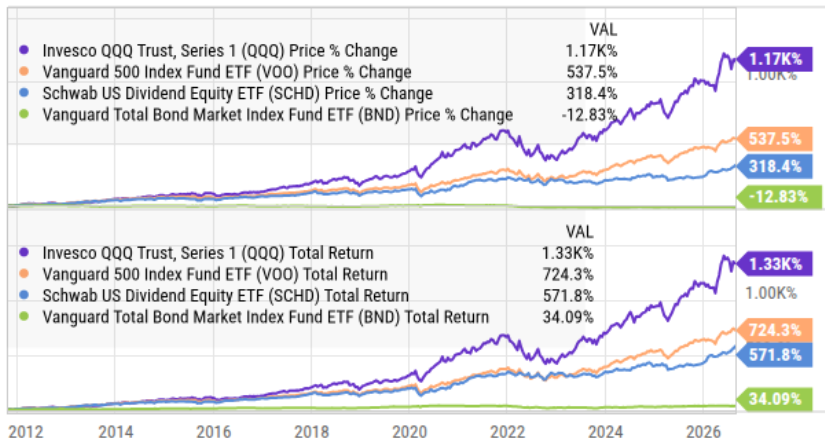
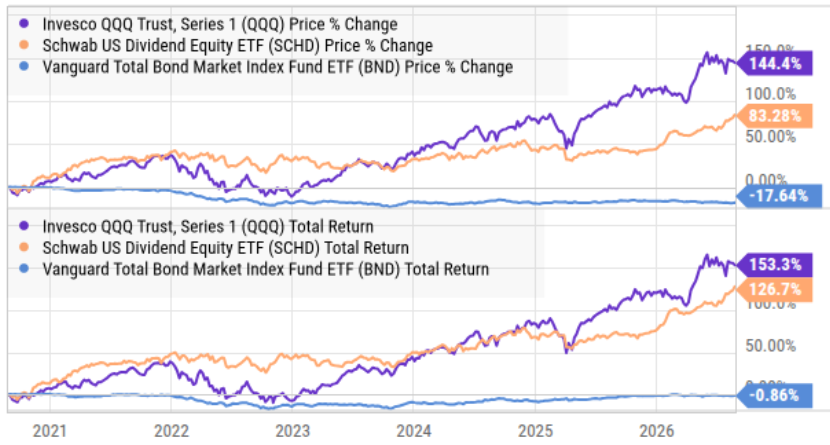
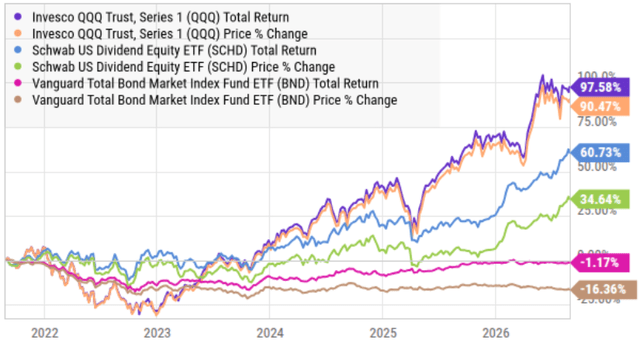
For example, as you can see in the chart above, the Nasdaq 100 has dominated other allocations, and bonds in particular (as measured by the Vanguard Total Bond Market ETF (BND)) have posted negative longer term price returns, while interest income is not as large as it seems after adjusting for inflation.
Washington DC’s Fiscally Bad Behavior
Before getting into the repercussions of new 60-40 (QQQ-SCHD) balanced portfolio, it’s worth considering the basic bad behavior out of Washington DC that is causing the increasingly-risky paradigm shift.
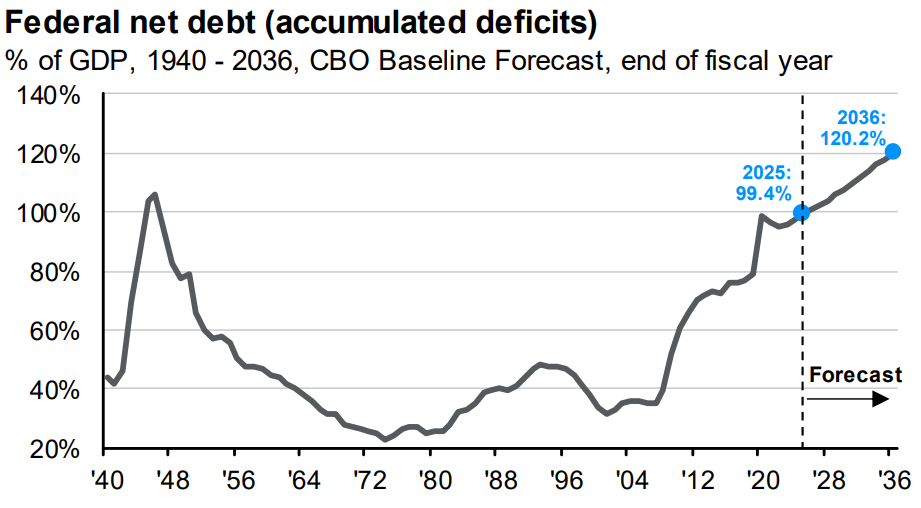
Monetary and Fiscal Irresponsibility: For starters, since the US departed from the gold standard in 1971, the government has become increasingly emboldened in its whipsawing monetary and fiscal policies. For example, the government has not been bashful about growing the national debt significantly faster than GDP (see chart below).
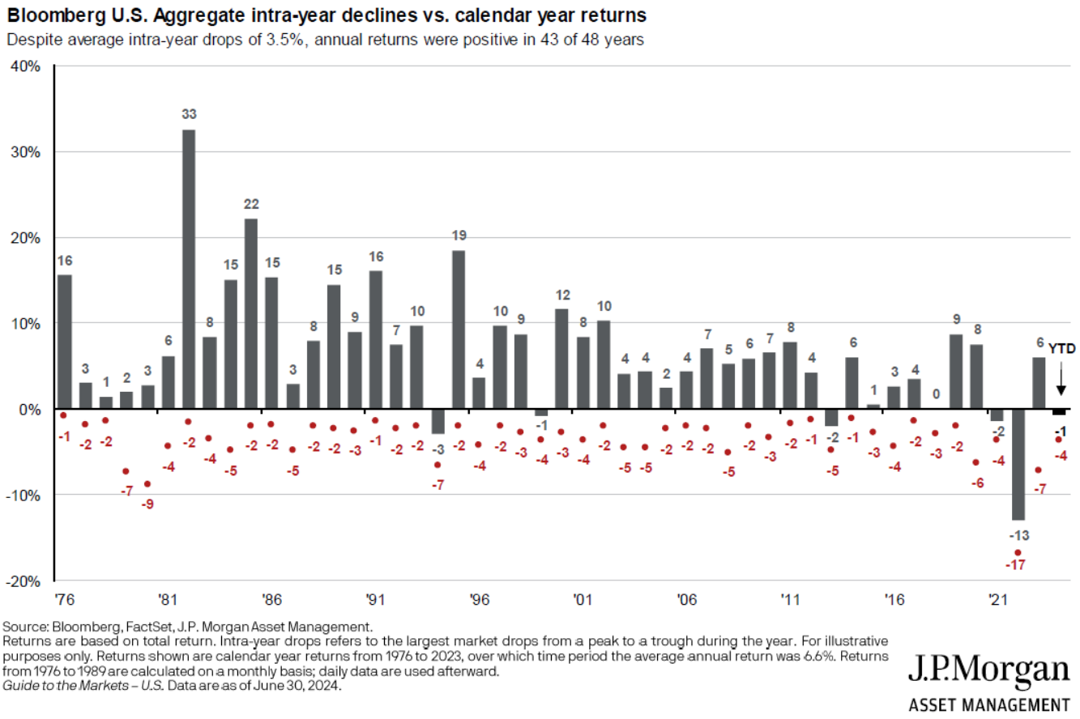
As a more recent example, the government’s loose monetary policies during and after the covid pandemic (whereby interest rates were cut to near zero in an effort to boost the economy, and then rapidly increased to fight the very inflation lower rates created in the first place) had some significantly negative impacts. For example, it led to the ugly 2022 calendar year declines for the aggregate US bond index (see chart below) plus increasing risk and fear for bond investors going forward (i.e. investors don’t soon forget big negative years for bonds, like the one in 2022).
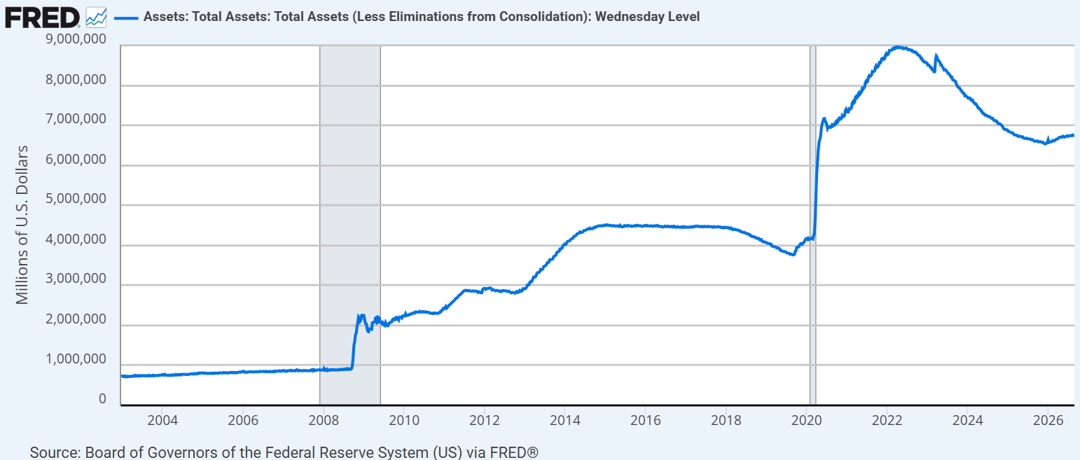
And in addition to increased risks for bond investors, the fed’s balance sheet expansion (see chart below) has contributed to inflation fears and moral hazard (as investors are less fearful of growth stocks if they believe the government is just going to indirectly bail them out—with fiscal and monetary policies—every time the economy gets in trouble anyway).
And in addition to the massive government spending graphics (above), the US lost its triple-A credit rating resulting in many distrusting investors increasingly flocking to alternatives like gold and bitcoin (more on these later).
Lacking Antirust and the Rise of Tech Oligarchs: As another form of bad behavior out of Washington DC, the government has allowed a small set of large technology stocks to basically become the gatekeepers for the internet and almost all major technological innovation in general. Had the government done a better job of protecting consumers from this anti-free market oligopoly, we’d be left with a stock market that isn’t so dramatically lopsided by a small handful of technology-driven mega caps.
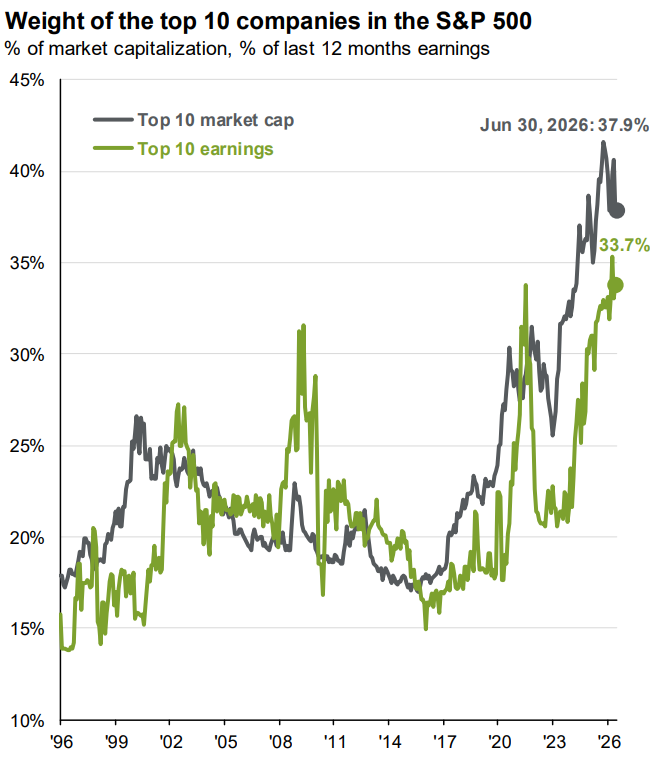
And this bad behavior by the US government has contributed heavily to the shifted 60-40 balanced portfolio (for many investors), as we describe in the next section.
SCHD and QQQ: The New 60-40 Portfolio
Interestingly, and in an unfortunate shift towards risk on the investment allocation spectrum, bad behavior by the US government (as described above) has pressured many investors toward a new and riskier 60-40 portfolio, simply to achieve some of the benefits of the old one that has been largely emasculated by inflation (and the growing threat of US monetary and fiscal policies that can now go from zero to 60—and back to zero again—faster than a Tesla (TSLA) Model S Plaid!).
The US Dividend Equity ETF (SCHD)
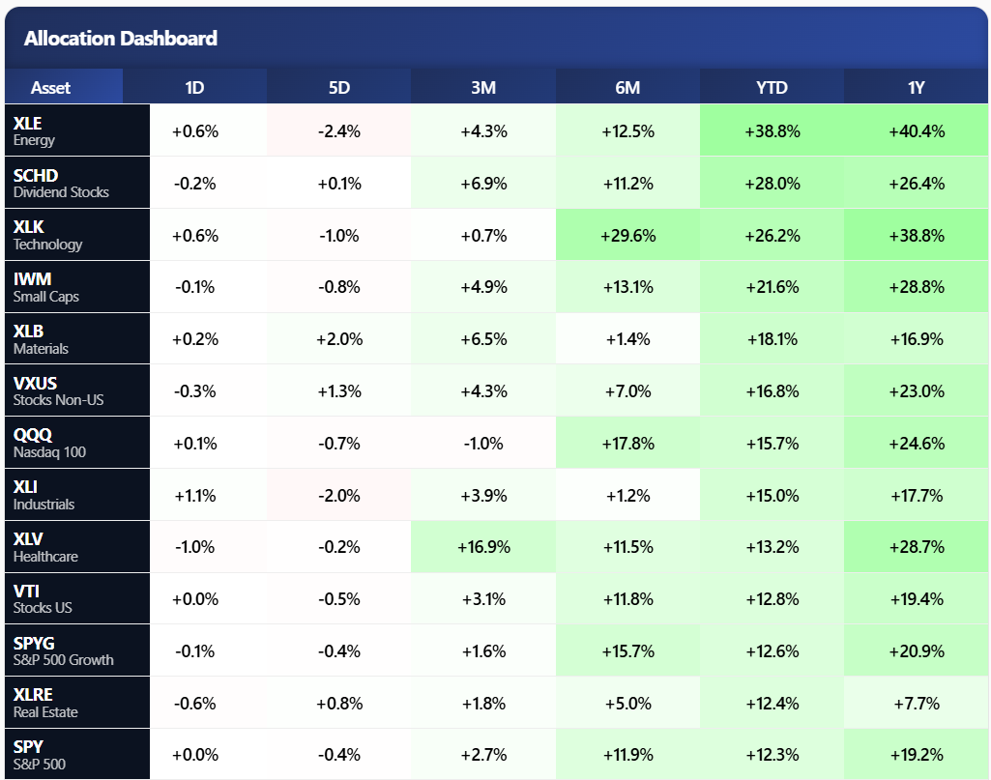
The notion that SCHD is the safer, lower-return, bond-alternative today, when it is beating the pants off the more volatile tech-heavy QQQ this year (see chart below), may sound absurd, but it’s not.
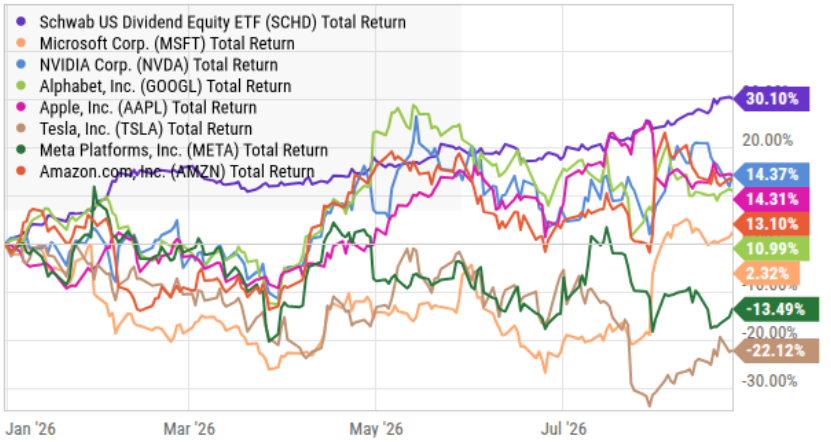
In particular, SCHD is doing exactly what it is supposed to do in the new 60-40 paradigm. Specifically, it’s providing steady income (through dividends and price appreciation) in a calendar year that is heavily challenged by high inflation (for example, consumer gas prices are way up) while bonds are down (on an inflation adjusted basis, see chart below), and tech stocks are volatile (e.g. the Mag 7 lags, while other tech stocks have been strong).
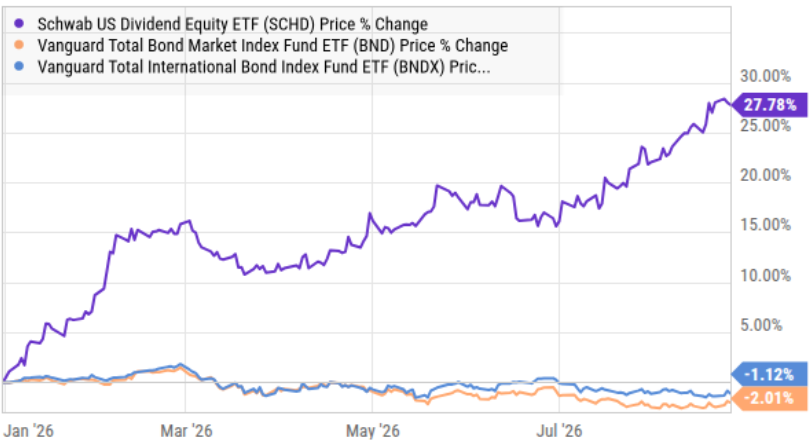
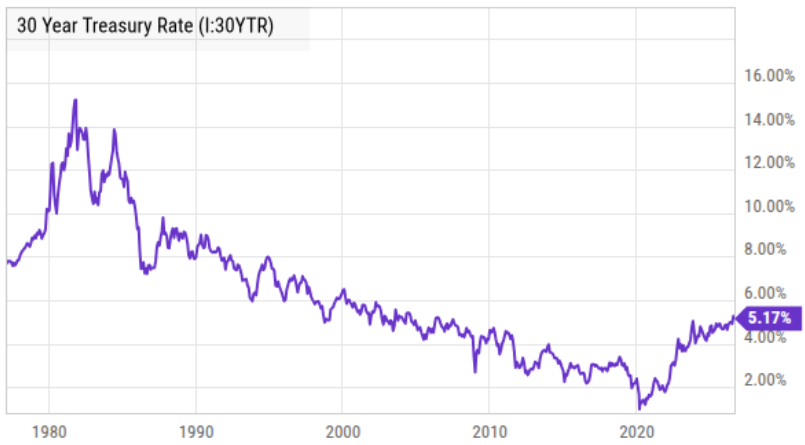
Not to mention, bonds have lost the 40-year tailwind of decreasing interest rates (when rates fall, bond prices go up, all else equal) and bonds now face the added headwind of rising interest rates (for example, the 30-year treasury just hit its highest yield in nearly 20 years as you can see in the chart below).
SCHD’s Objective: To be clear, SCHD is “focused on the quality and sustainability of dividends” (it yields ~3.0%, while QQQ yields only ~0.4%) and SCHD has benefited from a significant overweight to energy stocks (XLE) this year, as well as its omission of Mag 7 holdings (which have underperformed, as shown in the earlier chart, and as you can see in the table below).
SCHD as an Inflation Hedge: And important to note, one of the best benefits of SCHD versus bonds, is that SCHD is a better inflation hedge considering it owns blue-chip companies that are a critical part of the economy and people’s lives thereby diving a healthy dose of inelastic demand allowing the price of products and services to increase and ultimately the price of the shares to increase with inflation. In this regard, SCHD provides an inflation hedge that bonds don’t, and this is more important than ever considering the inflation-driving bad behavior increasingly coming out of Washington DC.
The Nasdaq 100 (QQQ)
The Nasdaq 100 may sound like a crummy investment right now considering it’s getting smoked year-to-date by SCHD, and it holds a lot of hyped-up AI stocks that many conservative investors are absolutely salivating—waiting to see crash—so they can dance on its grave.
But the reality is, despite higher volatility, many of the best long-term capital appreciation opportunities in the world are concentrated in QQQ (such as the tech oligarchs described earlier), and the AI megatrend is not a bubble (as per earnings growth and valuation metrics), rather AI is the real deal (for example, Nvidia, the leading AI chip makers, just announced another quarter of fantastic earnings!).
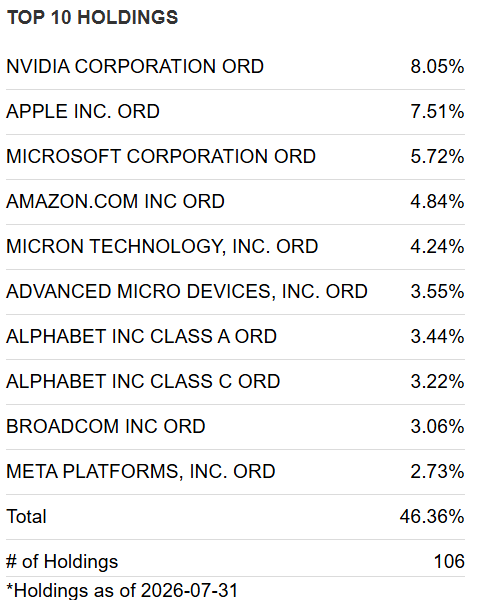
That doesn’t mean every Nasdaq 100 stock will soar, but it does mean many of them will (Nvidia is a leading indicator for what is to come from downstream tech), and in aggregate the QQQ will likely dramatically outperform SCHD over the long-term—albeit with a lot more volatility (just as it has been).
SCHD vs QQQ: For example, where SCHD focuses on the quality and sustainability of dividends, it lags sorely behind QQQ in revenue growth trajectory (which is part of the reason SCHD stocks are able to pay out high dividends—specifically because they don’t have the high-growth opportunities to invest in).
What’s more, QQQ holds many of the large cap technology oligarchs (think Mag 7, and those that benefit through them) that the US government’s lack of strong antitrust policy has created. And these oligarchs, on average, have dramatically higher profit margins than the stocks in SCHD, and dramatically lower dividends (because they have a long pipeline of growth opportunities—to spend their cash and profits on—that are simply unavailable to the business in SCHD—and again, that’s a big part of the reason why SCHD stocks are able to pay big dividends in the first place).
If you are looking for higher profit margins, higher long-term growth potential, and more long-term wealth creation ability (albeit with higher volatility) think QQQ. If you prefer lower-volatility, healthy dividends, and price appreciation that can beat inflation (but likely not QQQ over the long-term), consider SCHD.
A Note on QQQ and SCHD Correlation
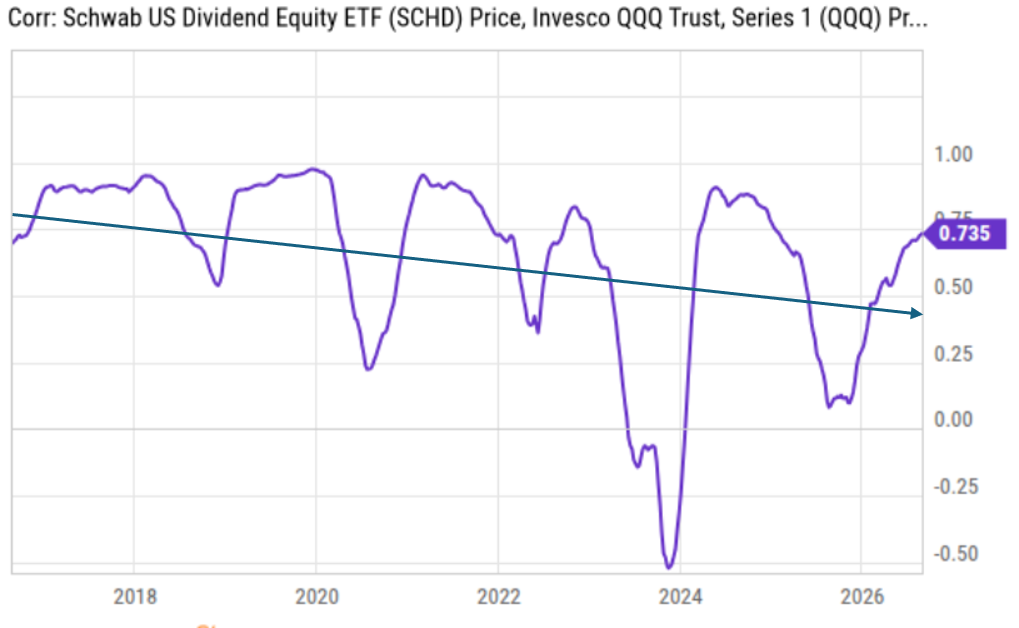
Worth mentioning, the correlation between SCHD and QQQ has been on the decline (a good thing for diversification benefits) as you can see in the following chart.
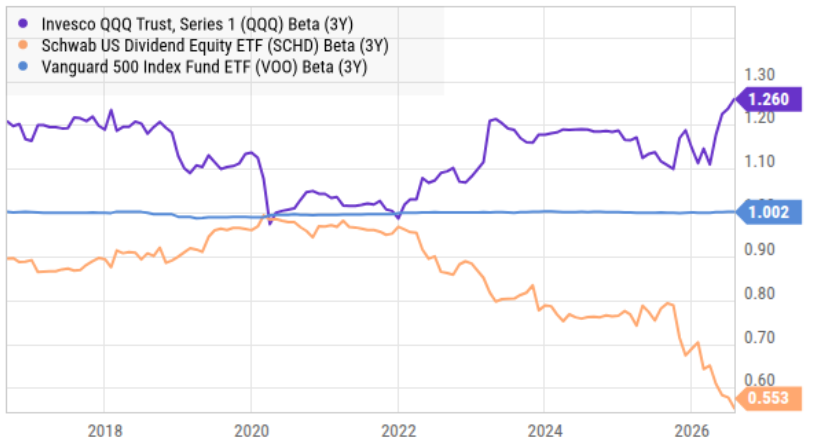
Further still, this next chart shows SCHD's volatility relative to the S&P 500 (i.e. its "beta") has also been on the decline, which is also a good thing for diversification benefits.
And of course beyond simply diversification benefits, SCHD's total returns matter too (because what good is diversification if your bottom line is negative--like it has been for bonds--especially on an inflation-adjusted basis).
Not to mention, the steady income from SCHD's healthy 3.0% dividend yield (higher than the dividend yield on QQQ and the S&P 500) makes any volatility a lot more tolerable for many investors.
Bitcoin and Gold as Financial Protest
Considering the fiscally irresponsible behavior coming out of Washington DC (as described earlier), we’d be remiss to not at least mention the rise of bitcoin and gold as the “protest assets” of choice for those fed up with DC inflation and money manipulation. And as you can see in the chart below, both bitcoin and gold have performed better than the S&P 500 (VOO) and SCHD since the start of 2020.
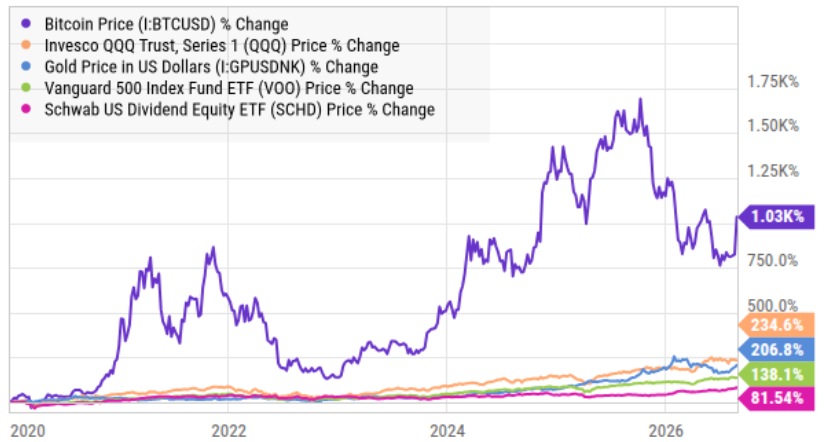
Without getting into the fundamentals of gold and bitcoin investing, investors must at least acknowledge there is something very economically real happening with protest assets, especially since the draconian fiscal and monetary policies of the US government (and governments around the world for that matter) in response to covid, and the stark impacts they had on inflation and the value fiat currency.
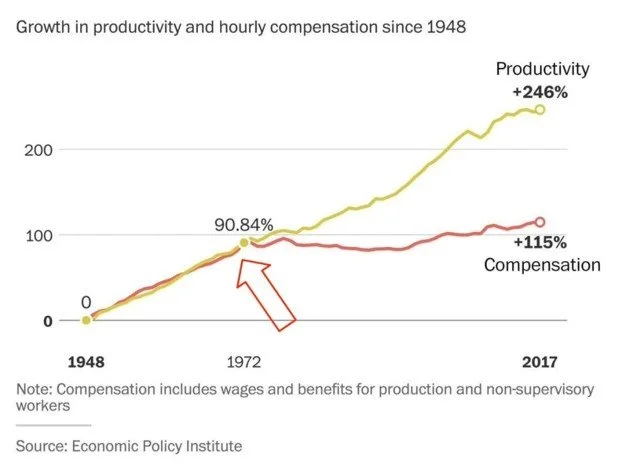
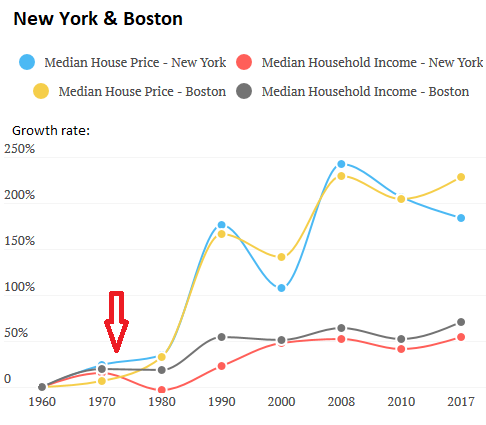
People are increasingly fed up with central banks devaluing sovereign currencies (particularly the US dollar, which has traditionally been the global reserve currency) for political purposes. And this problem has arguably been rising since the US government ditched the gold standard back in 1971, as you can see examples of the negative impacts of currency manipulation and inflation in the following charts.
The Bottom Line
To offset the negative impacts (e.g. inflation plus risk from a lowered credit rating) of the US government’s loose monetary and fiscal policies, a lot of investors have been pressured to ditch the traditional 60-40 stock-bond balanced portfolio, replacing bonds with blue chip dividends stocks (such as SCHD for income and to offset inflation), and replacing diversified stocks with concentrated tech-and-AI stocks (such as QQQ, because that’s where the government’s policies have concentrated many of the most attractive growth trajectories). Plus, for many, bitcoin and gold have quite successfully become the protest assets of choice.
However, despite the impressive success of this new 60-40 strategy in recent years, it introduces significant risks, and traditional bonds should absolutely still have a place in many investors’ balanced portfolios (albeit perhaps a slightly lower allocation than traditionally) such as this list of a few of my favorite bond ETFs right now.
So to be clear, this article isn’t recommending investors own only QQQ and/or SCHD (that would be absurd!). Nor is it recommending anyone go all in on bitcoin and/or gold just to protest the US government’s overly loose fiscal and monetary policies.
However, the article is suggesting you may want to reconsider your overall asset allocation in light of the significantly shifted macroeconomic dynamics in recent years. Bond risks aren’t what they used to be, and the types of investments held in both SCHD and QQQ increasingly fill niche needs for many investors.
Just know that disciplined, goal-focused, long-term investing continues to be a winning strategy. And at the end of the day, you need to do what is right for you.