
NAD: Muni Bonds Down Big, Five 8%+ Yield CEFs On Sale
Municipal bonds just sold off hard over the last month, and many big-yield muni-bond CEFs (with yields over 8%) sold off even harder. This article shares data on 5 top big-yield muni-bond CEFs—with a special focus on the Nuveen Quality Municipal Income Fund (NAD)—and then explains the selloff, the big risks, the tax consequences (particularly related to anyone receiving Medicare or Affordable Care Act subsidies) and then finally concludes with a strong opinion on investing.

What is a Municipal Bond
A municipal bond (aka “muni”) is basically a loan you make to a municipality (e.g. state, city, county), whereby they agree to pay you back with interest. Muni bonds are special because they are often exempt from federal income tax (and sometimes state and local taxes too). This make the concept of “tax-equivalent yield” important, especially if you are in a high-income tax bracket. For example, if a muni bond yields 5.5%, but you are in the 35% tax bracket, then your tax-equivalent yield is 8.46% (5.5% / (1-0.35))—not bad at all! Plus munis can be fairly safe—depending on the specific municipality issuing the bonds, of course.
Why did Muni Bonds Just Sell Off So Hard?
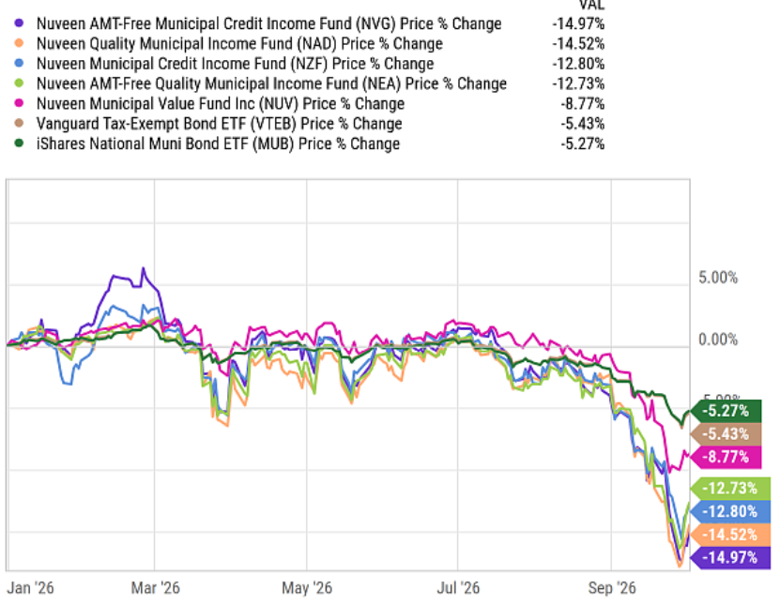
Here is a chart of the recent performance of a variety of municipal bond investments, including exchanged-traded funds (“ETFs”) and closed-end funds (“CEFs”).
And for perspective, you can see the current yield on each of these muni funds in this next chart.
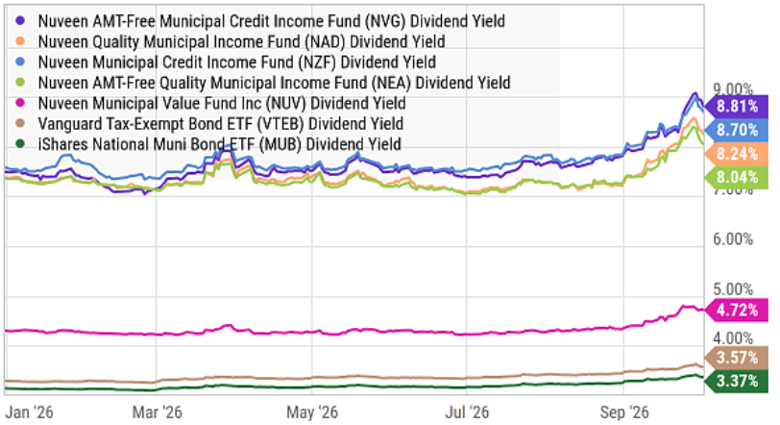
And remember, these are yields, so depending on what tax bracket you are in, the tax-equivalent yields of these muni-bond funds may be even significantly higher. That’s a lot of income—and it is all paid monthly!
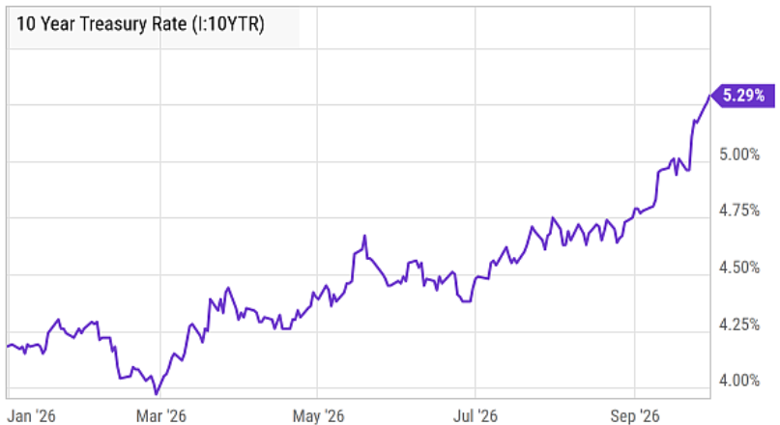
And the reason muni bond investments just sold off so hard over the last month is NOT because they all suddenly got much riskier from a credit perspective, but rather because interest rates, in general, just increased significantly. When interest rates rise, bond prices fall (all else equal). For example, you can see the yield on a 10-year US treasury bond just rose dramatically over the last month—which is the main reasons muni-bond investments fell—(i.e. interest rate risk, also known as duration).
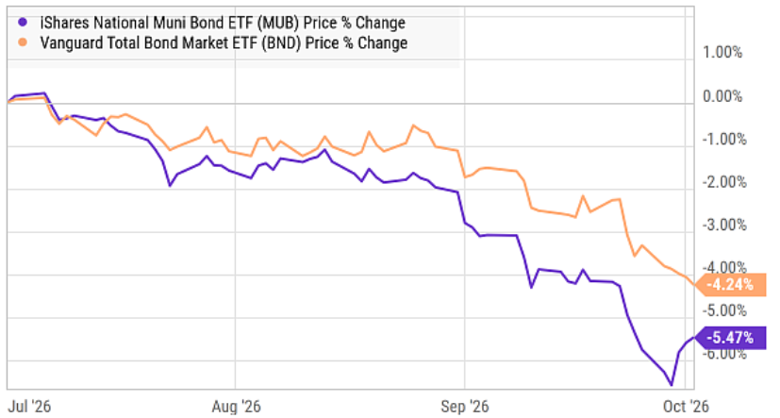
What’s more, muni bonds sold off even harder than other types of bonds—such as the popular Vanguard Total Bond Market Fund (BND)—because muni bonds tend to have higher durations (i.e. more interest rate risk). Without digging too far into the weeds, the aggregate bond market includes more mortgage-backed securities—which have more pre-payment risk than muni-bond, thereby making the duration on muni-bonds relatively higher even though the time until the bonds mature may be similar).
Who Should Consider Investing in Muni Bonds?
The conventional wisdom is that you should include a prudently-diversified mix of stocks and bonds in a balanced investing approach—and if you are in a higher tax bracket—and investing in a taxable account (for example your brokerage account, not your individual retirement account (“IRA”)) then muni bonds can make a lot of sense.
But the important distinction is there are a lot of different ways to invest in municipal bonds. For example, you can buy muni bonds directly (i.e. constructing your own prudently-diversified portfolio of muni bonds, being careful to reinvest the proceeds every time you receive an interest payment or when a bond matures—to make sure you are always fully invested), you can invest in exchange traded funds (such iShares National Muni Bond ETF (MUB) and/or Vanguard Tax-Exempt Bond ETF (VTEB), or you can invest in closed-end funds (which come with their own unique risks) such as the Nuveen Quality Municipal Income Fund (NAD).
Nuveen Quality Municipal Income Fund (NAD), Yield: 8.3%
NAD is a popular municipal bond CEF which offers immediately diversified exposure to over 1,000 individual muni bonds and currently yields 8.3% (paid monthly). And as discussed earlier, if you are in a high-tax bracket, and own NAD in a taxable brokerage account, then your tax-equivalent yield is even higher (i.e. the beauty of not owing federal income tax on the interest NAD distributes to investors monthly). You can view the fund’s fact sheet here.
But it is also important to recognize NAD is a CEF, and there are a lot of unique CEF considerations before investing, such as those highlighted in the following graphic.
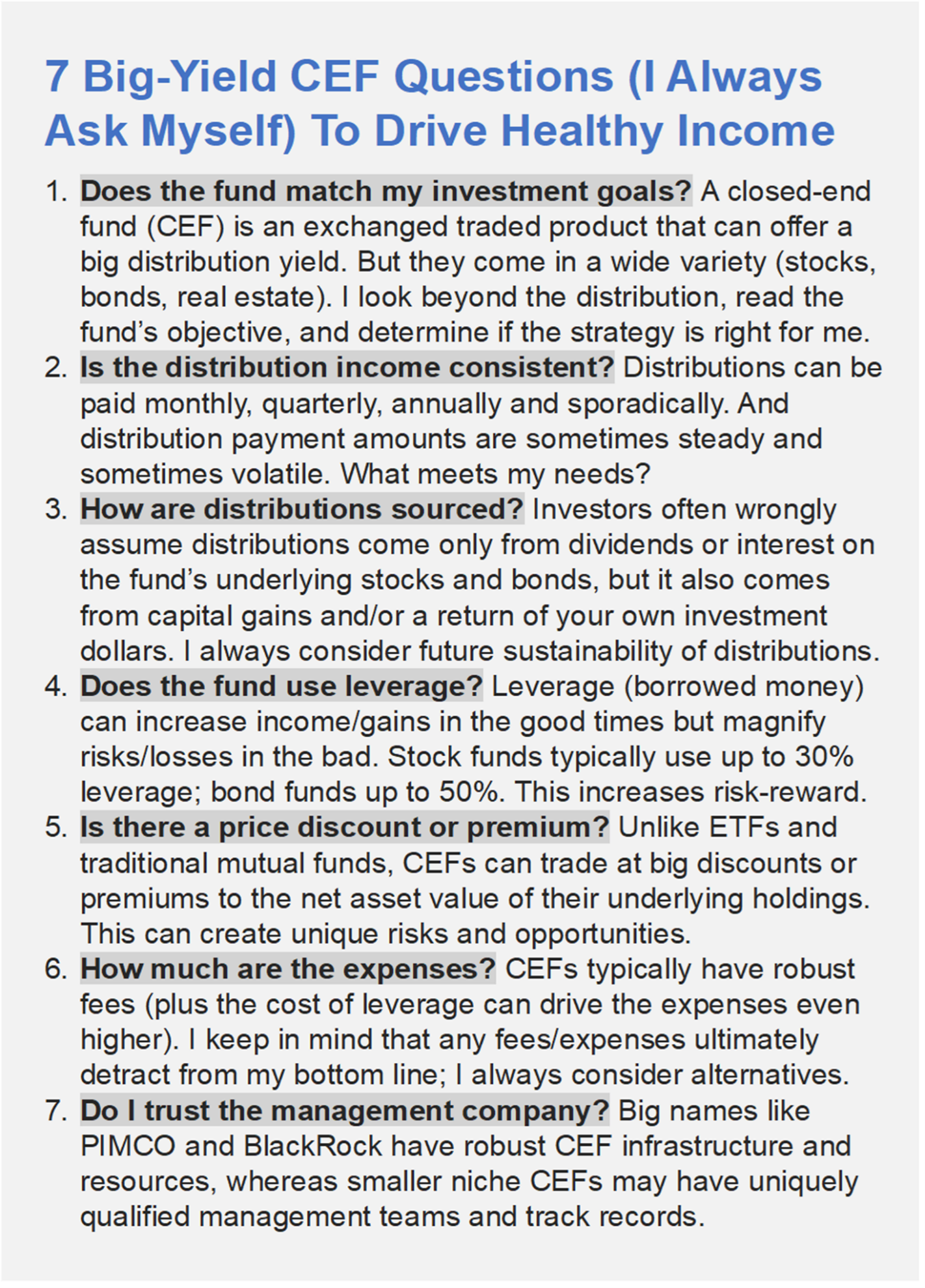
NAD’s Risk Factors
Aside from the attractive yield (paid monthly), the respected management company (Nuveen—the recent Schroder’s acquisition shouldn’t be a distraction), and an opportunity to buy significantly lower than just 1 month ago (the shares have sold off hard), there are also a variety of additional unique considerations for NAD investors.
Leverage: Unlike simply buying muni bonds, or investing in un-levered ETFs, Nuveen muni-bond CEFs use significant leverage (or borrowed money) to magnify interest payments. The trade off for this higher yield—is higher price volatility (and the challenges/expenses for Nuveen in managing a fund using leverage—that are ultimately passed on to investors—in the form of higher fees, higher borrowing costs, and increased share price volatility).
NAD recently had over 44% leverage (which is a bit on the high side, although not unreasonable, for this type of fund).
Heavy Recent Muni Bond Issuances: According to this recent Bloomberg Law article, muni bonds are “near their cheapest levels relative to Treasuries in a year as heavy issuance and fading demand collide with a broader fixed-income selloff.” We discussed the broader fixed-income selloff earlier, but the heavy recent issuance of muni bonds (combined with some fading demand) has also contributed to the selloff (although not nearly as much as interest rate volatility).
Price Discounts & Premiums versus NAV: A unique characteristic of many CEFs versus ETFs is that CEFs often can (and do) trade at significant market price premiums or discounts versus the aggregate market value of all of their underlying holdings, or net asset value (NAV). Recent market volatility has created a bit of a discount (see NAD chart below) which can make for a more compelling entry point for new investors.
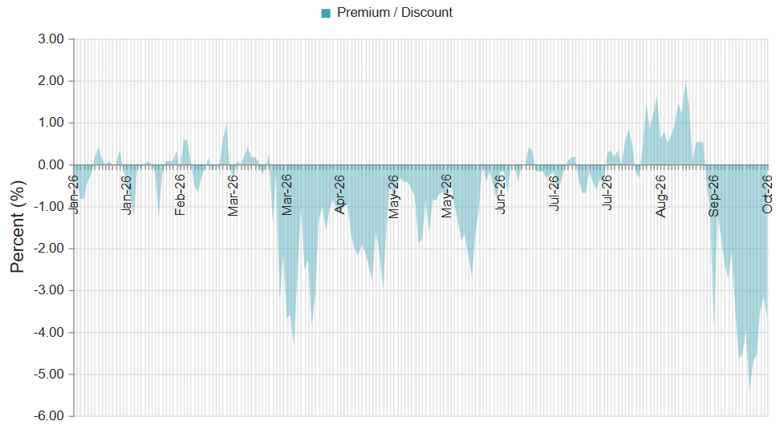
Just know, at times, the discounts and/or premiums can get a lot wider than what they have been so far year to date.
Impacts of Medicare Costs: Interestingly, interest income (and other non-interest distributions) from NAD (and muni bond CEFs in general) can impact your cost of Medicare (if you are currently receiving it). For example, although muni-bond interest may not count on your federal income tax bill, it is still counted when calculating Medicare Part B and Part D costs (i.e. your IRMAA Adjustment). For example, if your taxable adjusted gross income is $180,000, but your otherwise tax-exempt muni interest is $40,000, that can move you into the next IRMAA tier and cost you an extra ~$120+ per month.
Impacts on ACA Subsidies: Similarly, if you purchase Affordable Care Act health insurance, and you are currently receiving a subsidy, interest income from muni bonds can significantly reduce your subsidy amount, even though it may not count as income for your income tax bill.
The Bottom Line
If you are an income-focused contrarian investor, the Nuveen Quality Municipal Income Fund (NAD) is particularly tempting right now, but there are a lot of “ifs.” Specifically, it offers a big yield, paid monthly, and the price has recently declined even more than the NAV. Plus, it seeks to provide current income that is exempt from federal income taxes (particularly tempting if you are in a high tax bracket).
However, investors need to realize the tax benefits may be lost if NAD is held in an IRA instead of a taxable brokerage account. Also, 100% of NAD’s distributions are not muni-bond interest (return of capital has also been a consistent recent component). Further, even though NAD interest payments may not count as income on your federal tax return, the interest payments may still reduce your ACA healthcare subsidy (if you are receiving one) and push your Medicare part B and part D costs into a more expensive tier—yuck!
NAD is particularly tempting and attractive right now if you fit into a specific investor profile, but it is not right for everyone. Be sure to consult with your investment advisor or tax professional before investing.
Be smart people. Do what is right for you.