
Freeport-McMoRan: The Copper-AI Supercycle And Big Risks
As one of the world’s largest producers of copper (a metal with excellent electrical conductivity), Freeport-McMoRan (FCX) sits at the intersection of rising electricity demand (particularly from AI) and constrained global supply (copper prices have recently hit all time highs). This report reviews the big macroeconomic factors (e.g. electrification/AI and supply/demand) as well as company-specific considerations (e.g. Indonesia production, improving technology, and brownfield expansion), valuation, and risks, and then concludes with a strong opinion on investing in Freeport-McMoRan.
About Freeport-McMoRan:
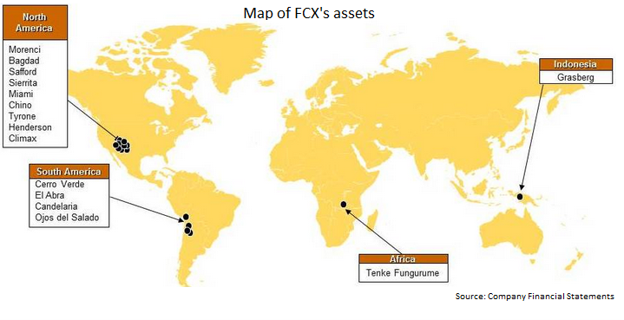
FCX is one of the world's largest publicly traded copper producers, with major operations in Indonesia, the United States, Peru and Chile. Its portfolio includes the Grasberg district in Indonesia, Morenci and Bagdad in Arizona, Cerro Verde in Peru and El Abra in Chile.
Copper is overwhelmingly the company’s strategic focus, supplemented by gold and to a lessor extent—molybdenum.
Electrification + AI-grid investment
Copper is an excellent conductor of electricity, and is a major component of global electrification and AI-grid investments. For example, over 65% of the world’s copper is used in applications that deliver electricity.
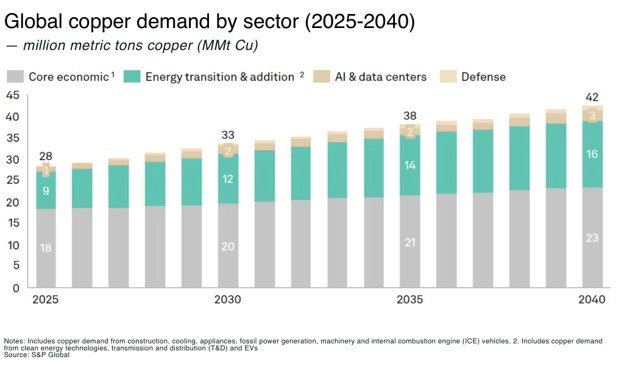
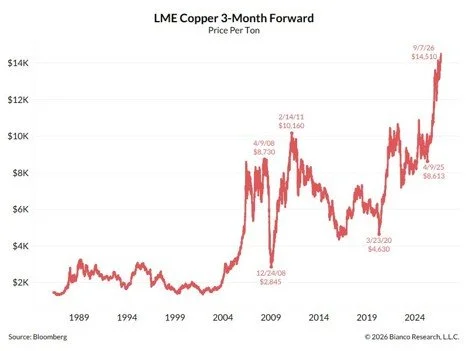
What’s more, AI is creating additional electricity demand (because data centers require enormous amounts of power and supporting grid infrastructure). And as such, copper prices have recently been pushed to all-time highs
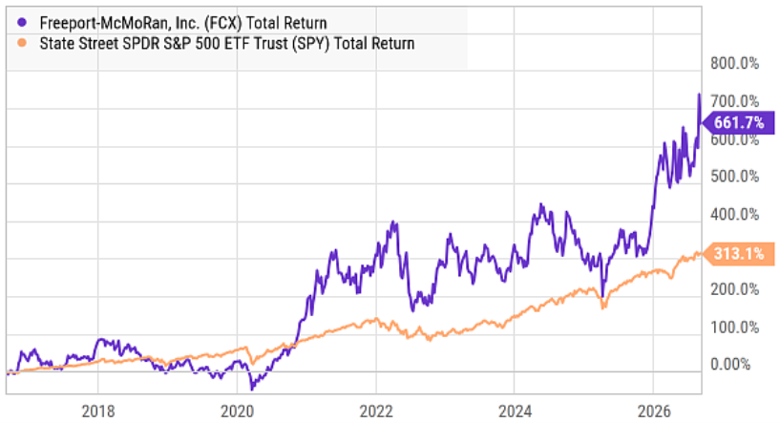
This has also been a positive for Freeport-McMoRan’s share price.
Macro Supply and Demand
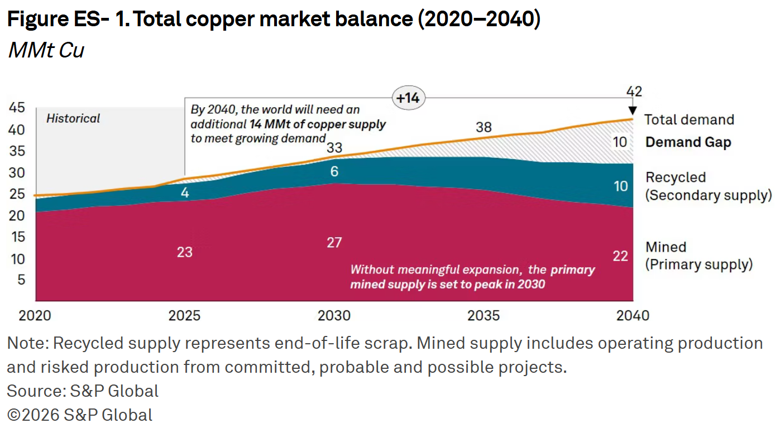
Supply and demand dynamics are a major driver of copper’s price—as well as Freeport-McMoRan’s success.
China, for example, is the world's leading copper consumer, making its industrial activity a major driver of global demand and prices. This means any industrial slowdown in China would be a significant headwind for copper prices (and FCX). So while FCX’s direct business with China is very small, China’s copper demand is still a major indirect driver impacting the success of FCX.
Structurally constrained global copper supply is the other big macro factor impacting FCX. For example, new copper mines require enormous capital, lengthy permitting processes and years of development. And existing copper mines also face declining grades and operational challenges. Furthermore, recent supply constraints have reinforced the argument that copper supply may struggle to keep pace with long-term demand growth. This creates an unusually favorable backdrop for established producers such as FCX.
Big FCX Business Considerations
Aside from the big macroeconomic supply-and-demand factors, FCX’s business has a few very important things currently happening.
Grasberg/Indonesia (see earlier map) is the most important near-term operational catalyst for FCX. Typically, Grasberg copper is relatively cheaper to produce and the assets normally contribute ~40-50% of FCX revenues. However, 2025 disruption (from a massive underground mudslide) has reduced it to ~30%. FCX is targeting having Grasberg back to ~65% of capacity in the second half of 2026, 80% by mid-2027 and near-full capacity by the end of 2027. And if achieved, FCX can generate substantially more copper from an existing world-class asset. Worth mentioning, the Indonesian government has also agreed to terms for an extension of FCX's operating rights, and this will be a major driver of business for FCX if Grasberg progresses according to schedule.
Improving U.S. productivity + leach technology is another important (and positive) factor for FCX’s business. For example, FCX is improving equipment reliability, mining rates and automation across its US mines. And even more interesting is the company’s leach initiative, whereby FCX is able to recover additional copper from existing stockpiles using additives, heat, and improved recovery techniques. Management is targeting approximately 300 million pounds of annualized leach production by year-end 2026, with a much larger long-term opportunity. This is a significant positive for the business.
Per Kathleen Quirk, CEO, President & Director, on the Q2 call:
“We're entering a period of growth in our Americas business with near- and medium-term opportunities to scale our leach initiatives and more than double production at our Bagdad mine in Arizona.”
Brownfield expansion (whereby old assets are profitably brought back online thanks to improving technologies and higher copper prices) are another attractive growth opportunity for FCX (particularly because they don’t require the extensive costs, time, and regulatory approval as compared to new mines). This is a big competitive advantage for FCX.
For example, FCX has multiple potential growth projects, including the Bagdad expansion, El Abra, Safford/Lone Star and Kucing Liar. Again, these projects leverage existing infrastructure and operating expertise, potentially reducing the risk and development time associated with greenfield mines. Bagdad (in North America—see earlier map) is particularly important as its proposed expansion could more than double production (although estimated capital costs are uncertain and have recently risen to ~$4.5 billion).
Valuation
From a financial standpoint, FCX remains healthy, with an investment grade credit rating (from all three major rating agencies), and plans to spend 50% of free cash flows on share repurchases and 50% on organic growth initiatives.
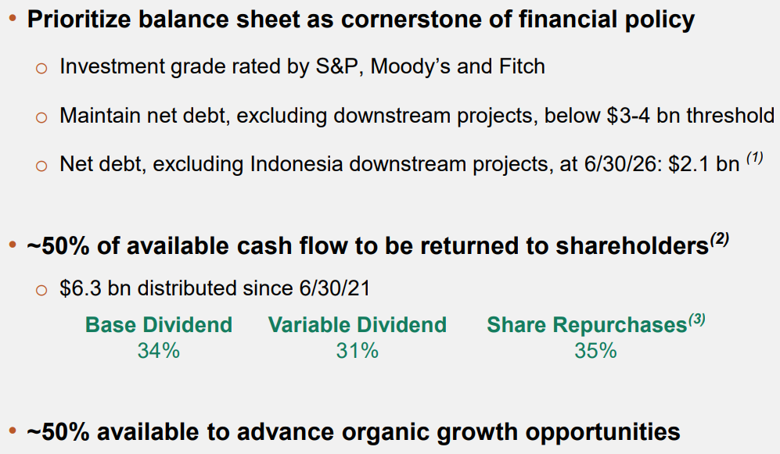
And as we saw earlier, the share price has performed well (outpacing the S&P 500 in recent years) as the price of copper continues to rise.
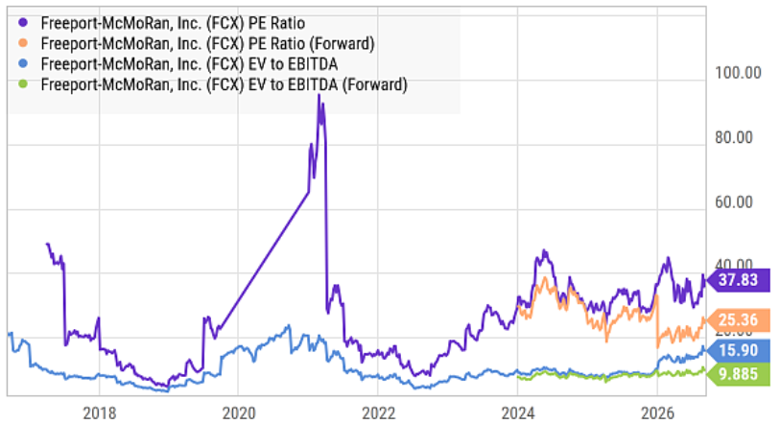
And with the shares currently trading at around 25.3x forward earnings—they are not cheap, but they are quite reasonable considering the outstanding earnings growth prospects as described earlier.

For example, you can see in the table above FCX shares have healthy revenue and earnings growth prospects, as compared to peers, thanks in large part to improving technologies, recovering mines in Indonesia, and brownfield opportunities. So despite the recent strong performance, and considering growth prospects, FCX shares are still reasonably priced, albeit with some risks.
Big Risks
Of course FCX faces big risks, such as those listed below.
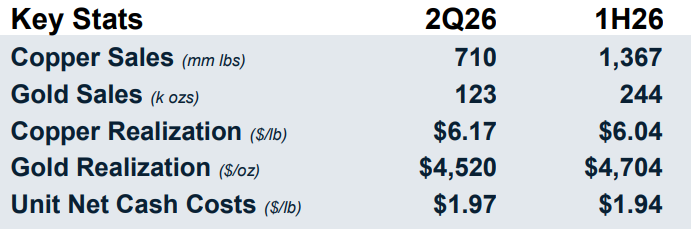
A Copper price decline and/or China slowdown is a big risk for FCX, considering the company has enormous operating leverage tied to copper. According to Maree Robertson, Executive VP & CFO, on the Q2 call:
“You will note we are highly leveraged to copper prices with each $0.10 per pound change equating to approximately $390 million in annual EBITDA in the 2027, 2028 periods.”
And a sustained Chinese slowdown or broader global industrial downturn could therefore have a disproportionately negative impact on FCX's earnings.
Grasberg execution and Indonesian licensing is another big risk factor. Specifically, the recovery is progressing well, but Grasberg remains a complex operation. Delays in the production ramp, further operational problems or complications in securing the long-term operating license could all materially change the investment thesis.
Capital intensity and project execution are another risk. For example, Bagdad's estimated $4.5 billion capital cost is already about 30% above its 2023 estimate. Further, inflation, construction delays, or poor returns on large projects could all reduce the value of FCX's growth pipeline. And the leach technology/opportunity also remains partially unproven at large scale. So this is another significant risk factor for FCX investors.
The Bottom Line
The key point to remember with FCX is that macro tailwinds remain constructive (i.e. demand is outpacing supply thereby pressuring prices higher), but it’s more than just a bet on copper. Rather, it’s a multi-level bet on the AI/digitization megatrend combined with company-specific catalysts (including Grasberg recovery, production-improving technology, and competitive advantages from being a large and established player in the space).
The current valuation is reasonable (considering the multiple growth drivers), but the risks (both macro and company-specific execution) are real.
Overall, if you are a long-term growth-focused investor, FCX shares are still attractive and worth considering for a spot in your diversified portfolio. I remain bullish and continue to own them in mine.