
Accelerating AI Demand: This 40x P/E Stock is Cheap
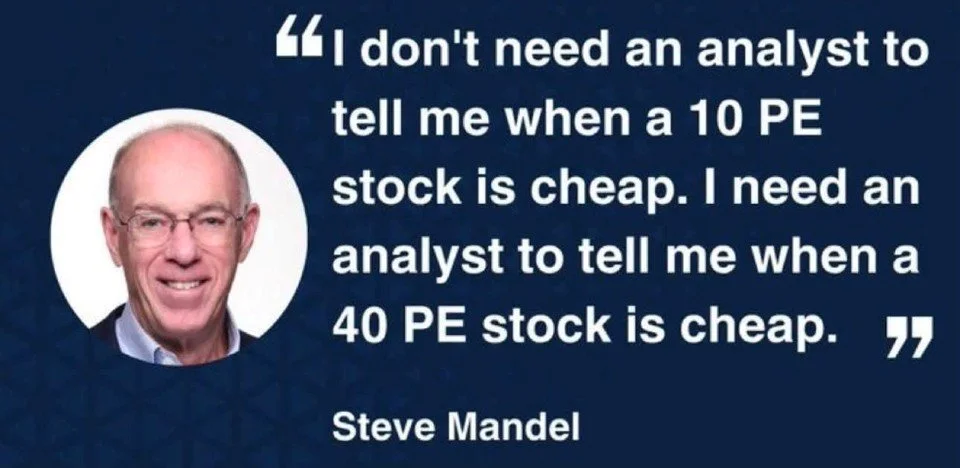
I don’t need an analyst to tell me a 10 P/E stock is cheap. I need an analyst to tell me when a 40 P/E stock is cheap.” That quote from Steve Mandel at Lone Pine Capital is particularly compelling with regards to the disruptive AI growth stock we review in this report (because it trades at 40x forward earnings—yet it’s still cheap relative to its growth trajectory—albeit with risks). After reviewing the business, the growth opportunities (the AI boom is creating extraordinary demand for infrastructure), the financials, the valuation, and the big risks—this report concludes with a strong opinion on investing.

About Vertiv (VRT)
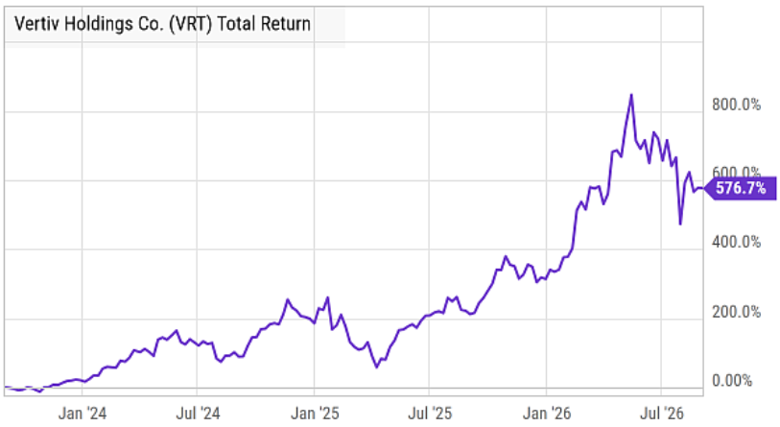
Operating in more than 130 countries around the world, Vertiv provides critical digital infrastructure for AI data centers, including power management, thermal management and liquid cooling. So while Nvidia and others sell the computing engines (i.e. the “chips”), Vertiv provides infrastructure for those chips to operate in data centers.
Explosive AI Demand
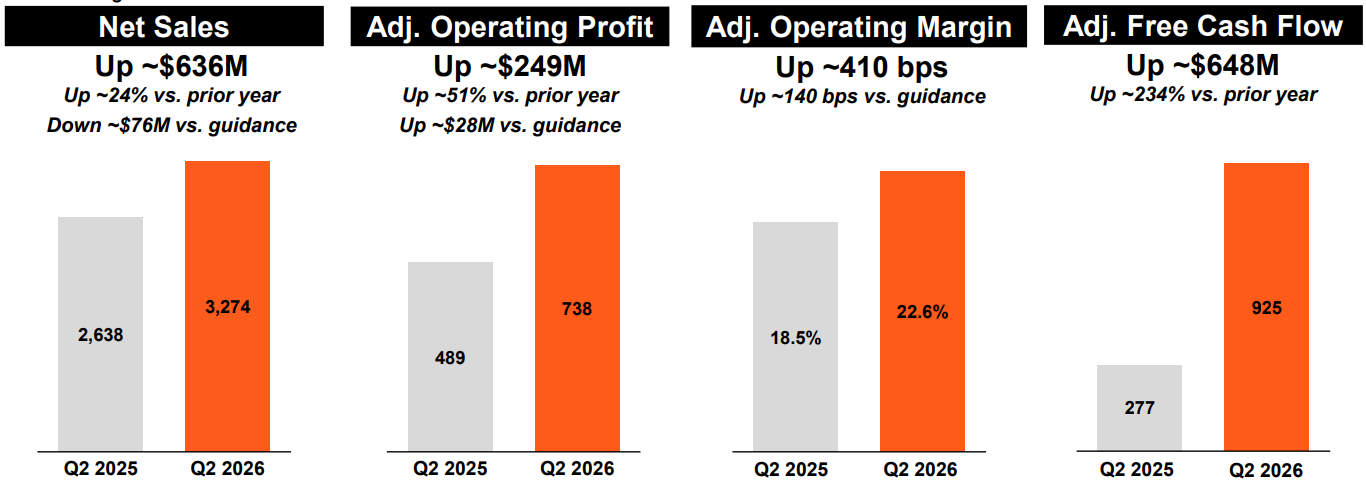
AI is creating extraordinary demand for data center infrastructure, and few companies benefit as directly as Vertiv. For example, Vertiv's most recent quarterly results (Q2) show revenue increasing 24% year over year to $3.27 billion (including 18% organic growth).
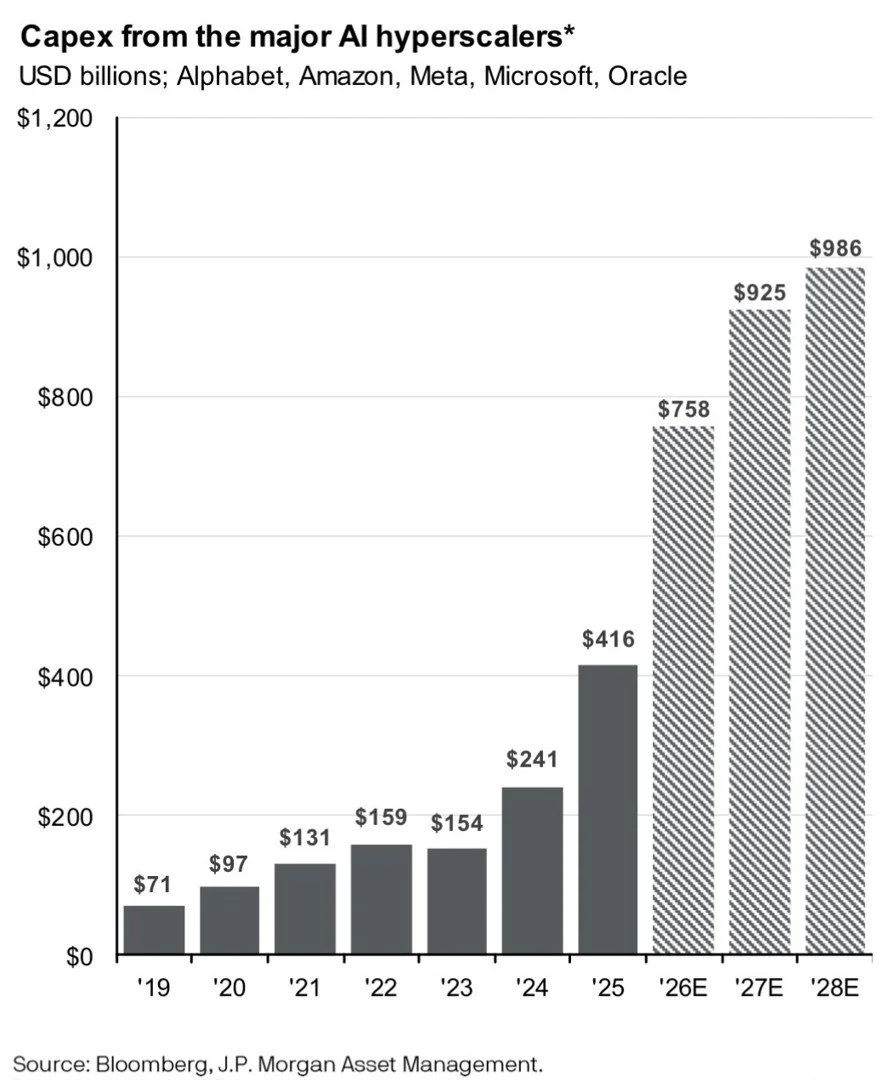
And even more impressive, management expects ~+35% organic growth in Q3 and has guided to 31% organic growth for full-year 2026. Further still, full-year revenue is now expected to reach approximately $14 billion, up 37% from 2025. In a nutshell, Vertiv’s high growth is accelerating (thanks in large part to continuing hyperscaler spending).
High-Density Power Evolution
Also important to note, beyond Vertiv’s current high-growth trajectory, its next phase could be even more valuable. Specifically, Vertiv is developing next-generation power architectures, including 800V DC, that could increase its revenue per megawatt as AI data centers become more power-dense.
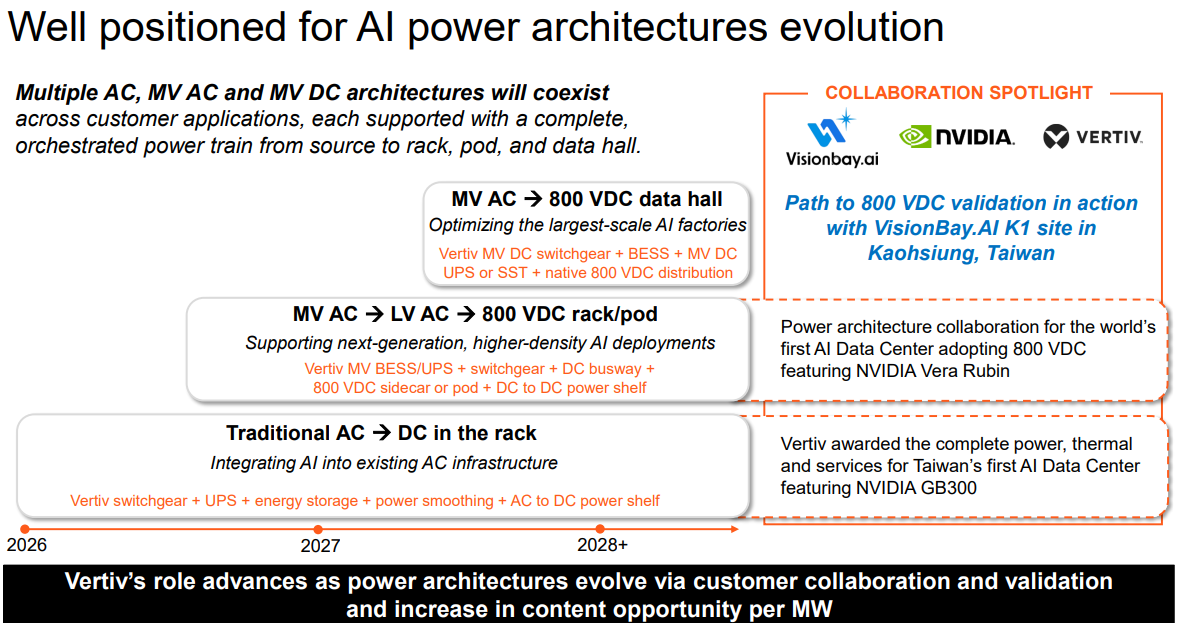
Said differently, Vertiv doesn't necessarily need to win a larger percentage of the data-center market to grow rapidly. If AI facilities become more complex and power-dense, each megawatt of data-center capacity can represent more revenue for Vertiv.
Financial Strength
From a financial perspective, Vertiv’s strength is arguably as impressive as its growth. For example, adjusted operating margin (in Q2-yoy) expanded 410 basis points to 22.6% (which is impressive). And management expects full-year adjusted operating margin of approximately 23.8%. This operating leverage is critical because if Vertiv can continue converting explosive revenue growth into expanding margins, earnings can grow even faster than sales.
And from a cash position, Vertiv is also strong. For example, adjusted free cash flow reached $925 million in Q2 (up 234% year over year), and the company had approximately $2.81 billion of cash (and $300 million of short-term investments) on its balance sheet at the end of Q2. Basically, large projects are producing large customer deposits (and milestone payments), thereby helping Vertiv finance its own growth—a good thing!
Valuation:
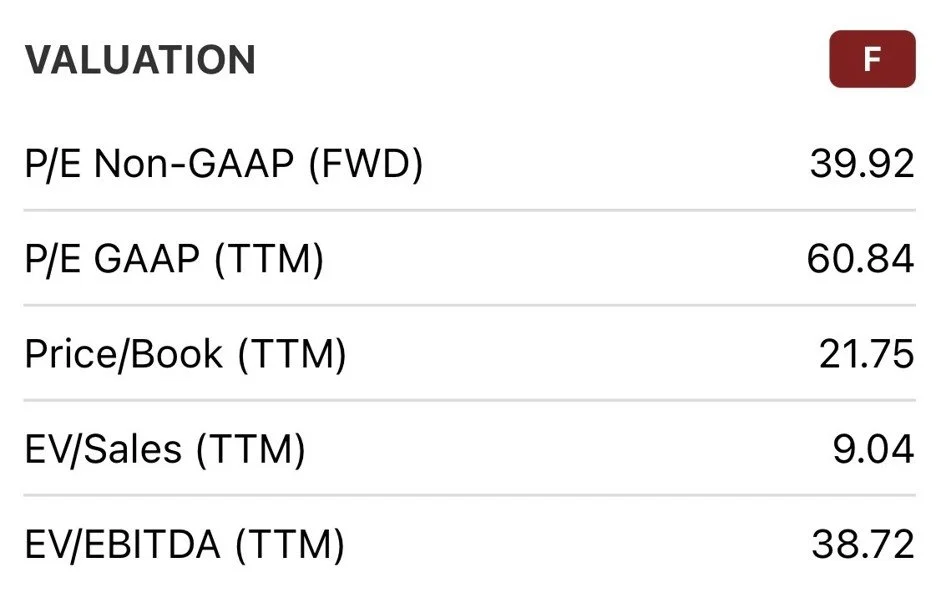
Currently trading at 40x forward earnings estimates, Vertiv is not cheap by most valuation standards. For example, the online data provider in the graphic below gives Vertiv’s valuation an “F”.
However, considering the extraordinary growth trajectory (with expanding margins), Vertiv is absolutely inexpensive. For example, that same data provider gives Vertiv an “A” on growth and an “A+” on profitability.
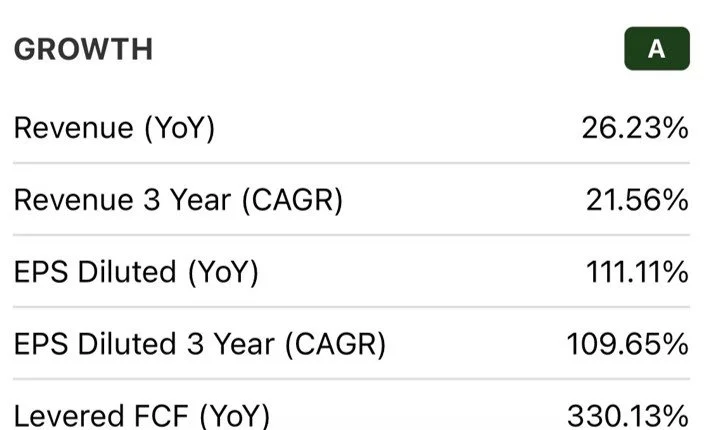
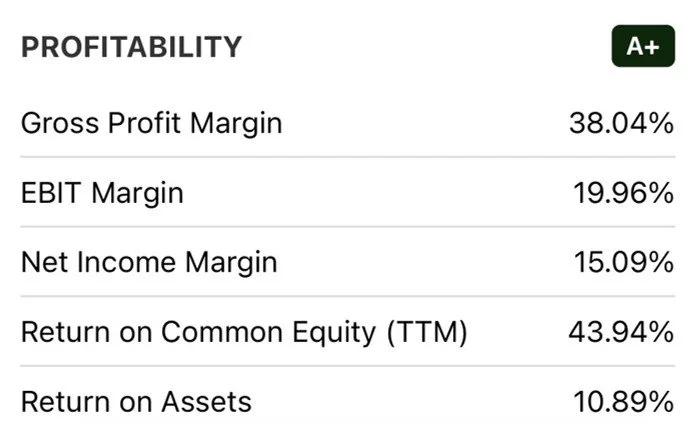
And considering the fundamental strength of the AI megatrend, Wall Street’s notorious short-sightedness, and the fact that the shares have recently sold off from 52-week highs (despite continuing fundamental strength), Vertiv shares are “cheap” at 40x forward earnings.
Risks
Vertiv’s biggest risks appear to be on the execution side (not the demand side) as projects continue to get bigger and more complex. For example, in Q2, Vertiv experienced some timing “shifts” (caused by supply-chain congestion and the complexity of multi-phase projects). Management emphasizes that these were primarily timing issues rather than lost demand—but also acknowledged that the learning curve is real.
The next test for Vertiv will be in the second half of this year, as to whether the “catch-up” (from the timing shifts) actually happens. If the company cannot hit the 35% organic growth target management is forecasting, investors may start to believe the challenges are structural instead of temporary.
Along the same lines, margins are another question. For example, the recent operating margin expansion to 22.6% in Q2 was outstanding, but investors need proof the company can maintain and extend them as the business rapidly adds capacity (including engineering resources and manufacturing capabilities).
Finally, the valuation itself creates risk. At approximately 40x forward earnings, the shares require continued strong execution. If AI data-center spending slows (unlikely given hyperscaler capex forecasts), if orders weaken (unlikely considering the backlog is real), or if 800V adoption takes longer than expected, the multiple could compress significantly. However, if the high-growth trajectory continues, the current multiples are still too low relative to future earnings.
The Bottom Line
The execution risk at Vertiv is real as its people are basically drinking from a firehose (as they attempt to execute on the truly extraordinary AI/datacenter infrastructure revolution).
However, this is basically a “high-class” problem to have, as AI demand is accelerating, and Vertiv's revenue per megawatt, cash generation and operating margins are all expanding.
High beta stocks (Vertiv’s is 1.9) can be whipsawed both higher and lower with the overall market, but that’s the near-term price you often pay for the best long-term growth opportunities ahead. Vertiv is an attractive business—and an attractive stock, even at 40x forward earnings.
Long Vertiv (in the BH LTCA portfolio) with no intention of selling anytime soon.