
A Big AI Hedge Fund Just Blew Up: 4 Timeless Takeaways
So an inexperienced kid (named Leopold Aschenbrenner) with a big ego and a lot of leverage (i.e. borrowed money) just blew up a popular AI hedge fund (called Situational Awareness) this past week. I’d love to tell you there is some great new lesson to be learned, but unfortunately—It’s the exact same lesson as always.
This article shares 4 timeless takeaways from this week’s Situational Awareness AI/SaaS blow up.
Overview: What Happened?
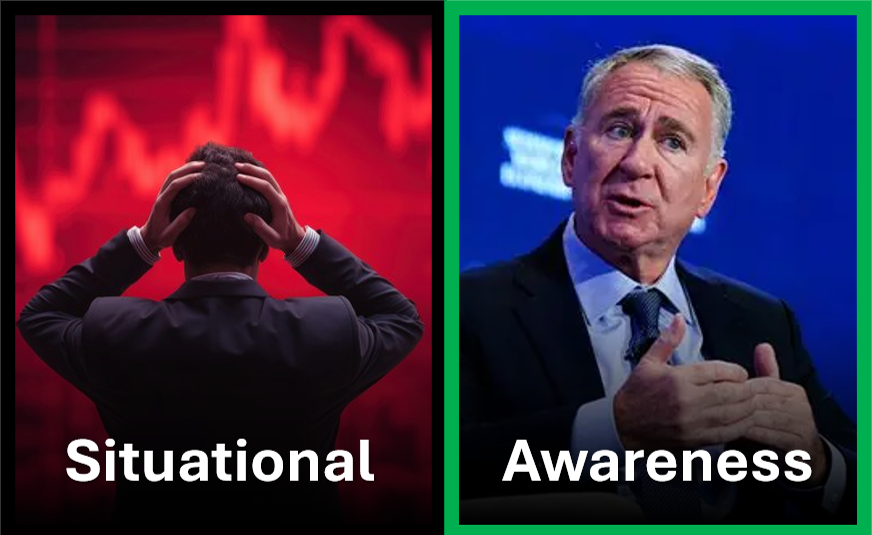
Situational Awareness was one of Wall Street's hottest AI-focused hedge funds. The fund built a reputation for making concentrated bets on AI infrastructure and related companies while reportedly betting against traditional software businesses it believed would eventually lose to AI (such as Adobe)
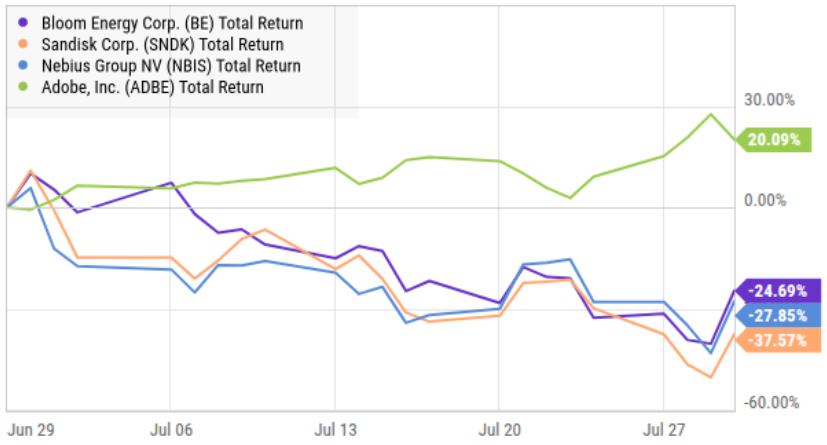
However, when several high-flying AI stocks pulled back at the same time that beaten-down Software-as-a-Service names began to rebound (over the last month), the fund's highly leveraged portfolio was squeezed from both directions. Margin calls hit fast, positions had to be liquidated, and what was one of the market's hottest funds quickly became one the biggest losers.
4 Timeless Takeaways from the Blow Up
Lesson #1: It's Always the Leverage
If you've studied investing history, you already know the pattern.
Long-Term Capital Management. Amaranth Advisors. Archegos. And now Situational Awareness, to name just a few.
Different markets. Different decades. Same ending.
Leverage is what turns a bad month into a total disaster.
Borrowed money can magnify returns spectacularly when you're right. Unfortunately, it magnifies losses even more spectacularly when you're wrong (because margin calls force sales (at distressed prices) that lock in losses (and causing you to miss out on any future rebounds)). So even if you have the correct long-term thesis—you can still go broke long before the story fully plays out.
That’s what just happened to Situational Awareness.
Lesson #2: “Book Smarts” Don't Make Great Investors
Wall Street has a habit of confusing book smarts with investing ability.
They're not the same thing.
Every few years, someone with an elite resume, impressive credentials, or a reputation as a genius shows up convinced they've figured out what everyone else is missing. They often have brilliant ideas, sophisticated models, and tremendous confidence.
What they usually don't have is experience.
The market doesn’t care that Leopold Aschenbrenner was a valedictorian at Columbia University when he graduated at 19 (in 2021). It took his fund’s money (reportedly tens of billions of dollars) 100% indiscriminately.
Lesson #3: Survival Is a Competitive Advantage
To the dismay of critics, Warren Buffett’s Berkshire Hathaway often carries enormous piles cash on its balance sheet. But when markets panic—and investors are forced to sell—that cash quickly becomes one of the most valuable assets in the world.
Similarly, Ken Griffin’s Citadel is reported to have stepped in this past week to purchase assets from Situational Awareness (on the cheap) after the fund was forced to unwind (to meet those margin calls). One firm’s big loss will likely turn into another’s big gain.
That's how markets work.
Surviving volatility with financial strength continues to be a winning strategy.
Lesson #4: Risk Management Never Goes Out of Style
Yes, AI is transforming industries.
Yes, some legacy software companies will eventually go broke.
But none of that changes the fundamentals of portfolio management.
Through a highly 4x-leveraged strategy, Situational Awareness went all in on AI and all out against legacy software. And when both moved against them (even if just temporarily—through short-term volatility) the fund got burned. Badly.
That's the danger of throwing “risk management” to the wind and putting too much confidence behind a single theme or bet (in this case AI).
The Bottom Line
Technology changes. Human nature does not. Even if you believe AI is a generational investment opportunity (which it seems to be), a prudently diversified, goal-focused, long-term investment portfolio never goes out of style.
Be smart people. Do what is right for you.