
Rising Interest Rates: A Tale of Two Stock Markets
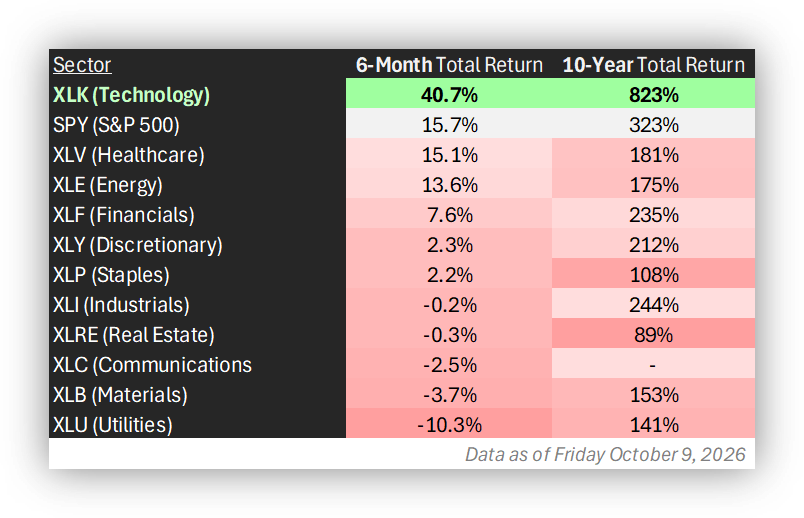
Selling tech stocks now would be like benching Michael Jordan because he just won the MVP.
The Fed has been raising rates to fight inflation, but it seems they are fueling big unintended consequences. In particular, they are accelerating the bumpy US market transition to AI. After reviewing some details, this report concludes with an opinion about how you might want to consider positioning your own personal investments in this dangerous—higher interest rate—environment.
The Fed Cannot Accomplish Its Goals
The US Fed’s dual mandate is to promote maximum employment and stable prices (2% inflation), yet they do NOT have the tools to promote this prudently, especially considering the widely differing impacts of their policies on different parts of the economy.
For example, the Fed’s recent decisions to raise interest rates disproportionately impacts debt-heavy legacy companies (such as telecom, real estate, and certain consumer staples) much more than disruptive growth companies (such as AI) which have much easier access to growth capital (thanks to high investor demand!)
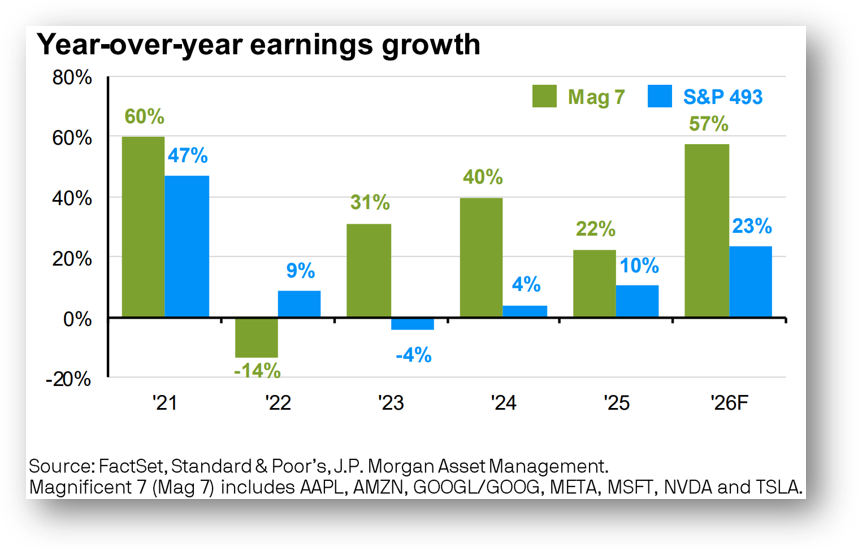
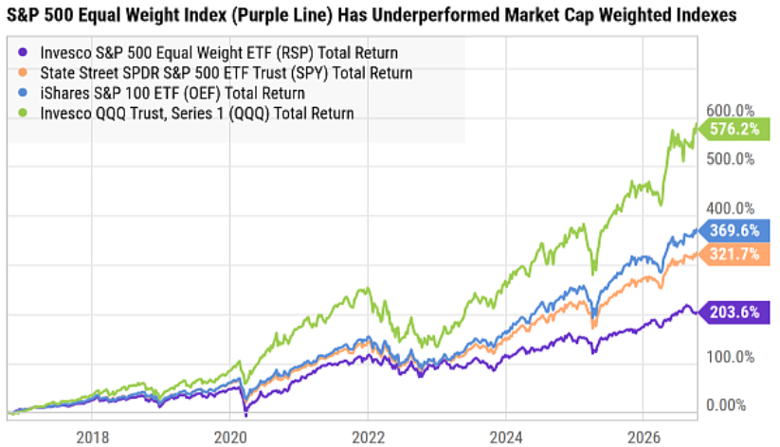
And one big result, a headline stock market (SPY) that keeps rising, while under the surface the gains are concentrated in just a few industries (largely AI and technology related) and only a subset of companies (think the Nasdaq 100—which is basically large-cap tech).
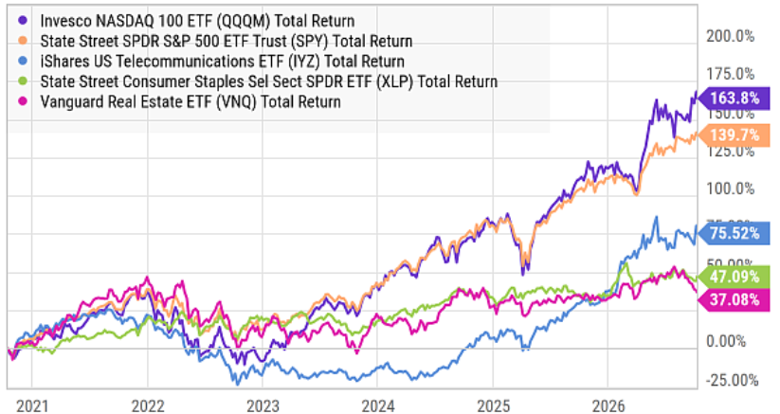
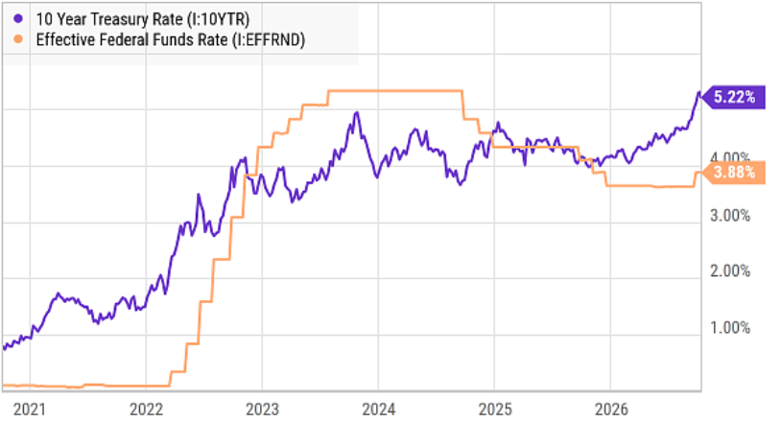
As a result, the Fed is basically accelerating the US economy transition to technology and certain service-based industries, while penalizing traditional economic contributors hard (see charts above).
Conventional Wisdom Quips Are Dangerous
Social media loves to throw around conflicting shallow zingers. For example, many supporting the narrative that AI is a bubble (it’s not!) love to say things like the four most dangerous words in investing are “this time is different” as if to suggest AI is a bubble that will soon burst akin to the dot-com bubble of over two decades ago.
Or some of the less financially literate crowd likes to say “past performance is not indicative of future results” as if to imply valuations are totally irrelevant and certain hot AI stocks will rise forever (they won’t, and valuation still matters!).
As an investor, you need to be careful NOT to be lured by the emotional bait on social media.
The Cloud and AI Megatrends Are Real
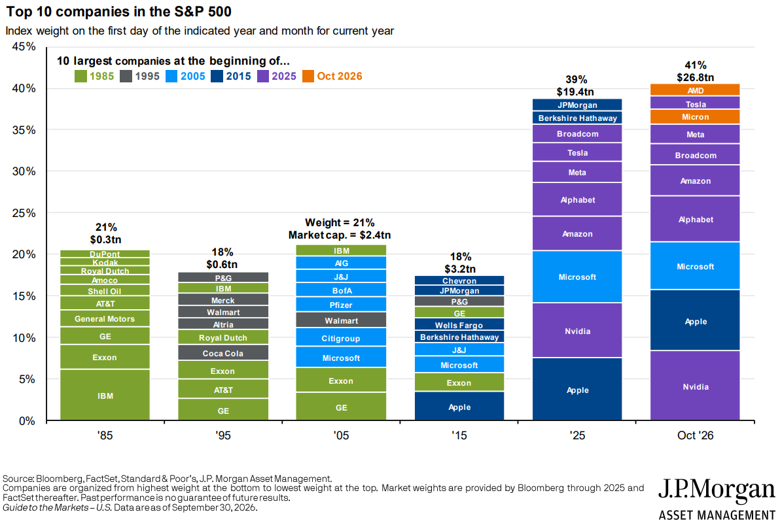
There are still tons of old-school investors out there who are clinging to their shares of AT&T—which they bought in the 1980’s—when it was one of the largest companies in the world—because they believed it would stay that way forever (Elon Musk’s SpaceX apparently had something to say about this on Friday).
But even after factoring in the huge dividend yield (or whatever other excuse some investors have for still owing legacy economy companies) it has slowly yet dramatically UNDER-performed the rest of the economy for decades—especially as big megatrend changes take hold and shift the economy entirely.
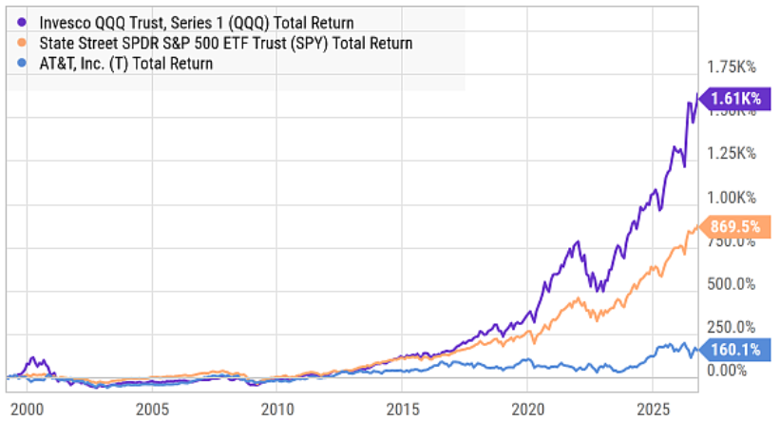
Keep in mind also, the once abominable early-2000’s tech bubble is now but a small blip on the long-term performance chart, as you can see above.
Interest-Rate Sensitive Business are In Trouble
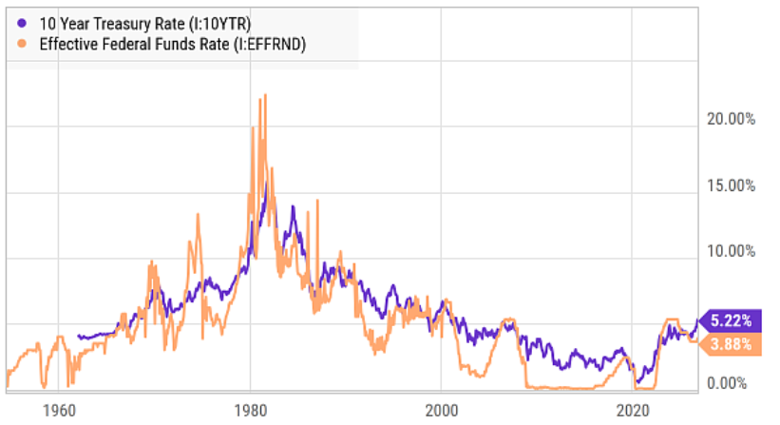
For 40 years, from the early 1980’s through 2020, interest rates declined, and entire industries popped up and grew. But as interest rates have made an “about face” since the Fed started fighting post-covid inflation—interest rate sensitive industries and sectors have been taking it on the chin.
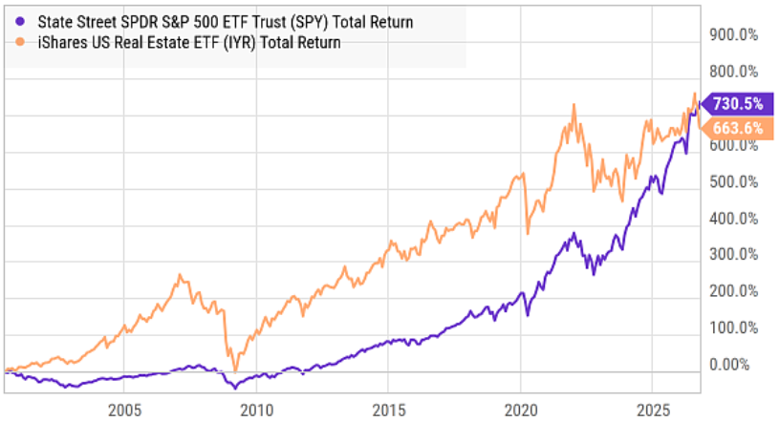
For example, you can see Real Estate performance once crushed the S&P 500 until interest rates did their abrupt post-covid about face.
And as you can see in the chart below, higher-yielding investments in general (such as REITs, Business Development Companies (BDCs), Mortgage Backed Securities, and even old school “phone companies” like AT&T and Verizon have been getting their shorts handed to them—relative to the more disruptive “new economy” sectors of the market.
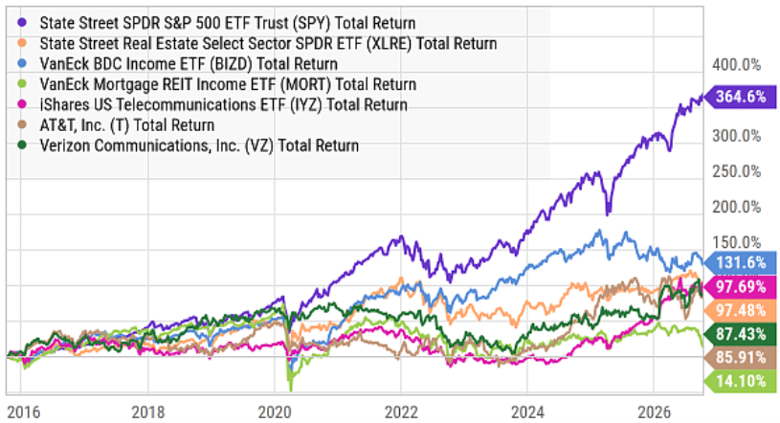
And what’s scary, is that this is a trend that may not end any time soon. The interest rate cutting cycle lasted 40 years—who is to say the interest rate hike cycle may not last just as long.
The US Government is Buried in Debt
And what makes high interest rates even more scary is that the US government is buried in debt.
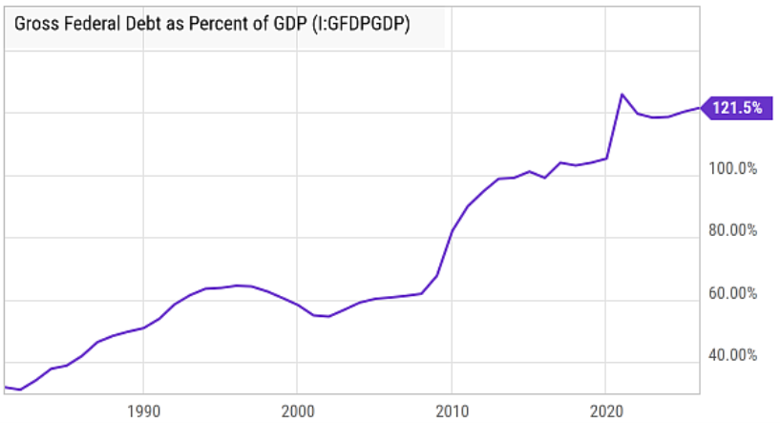
Every time the fed hikes the fed funds rate they are indirectly hiking treasury rates and sending a bill directly to the taxpayer who has no choice but to support the US government’s massive treasury debt problem.
Cost of Living is WAY Up—Bitcoin and Gold are NOT the Solution
And in case you haven’t noticed, the purchasing power of the US dollar continues to weaken—a lot—over time. Some argue the inflation problem accelerated when the US went off the gold standard because it allowed the government to print money—and weaken the dollar—without real limits.
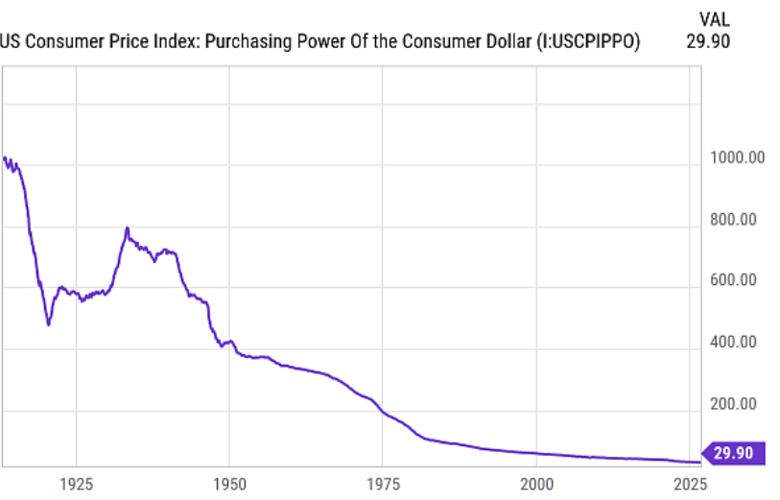
Others have piled into gold and cryptocurrencies—especially in recent years—in an effort to wean themselves off of US dollar dependency.
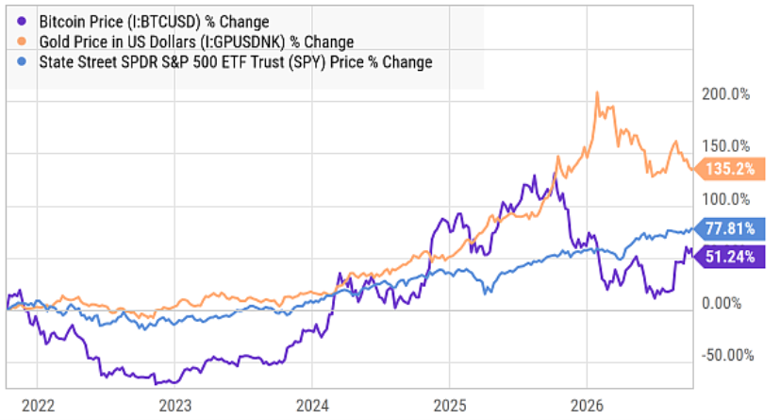
That highlights the problem, but is likely not the final answer considering their recent high volatility—and lack of backing by the US government (which the dollar still is and that still counts for something—although seemingly a lot less than it once did).
How You Might Want to Position Your Investments
Another good option to protect yourself from inflation—and also benefit from a highly dynamic and constantly evolving US economy—is to invest in stocks with relatively low elasticity of demand. That means businesses that people keep doing businesses with—even when prices go up.
For example, a lot of new economy cloud and AI stocks keep generating massive revenue even though their prices keep going up. For instance Nvidia (there is massive demand for this leading cloud and AI chip designer) as well as the entire tech-heavy Nasdaq 100 for that matter (which has done a better job keeping up with economic shifts than, say, AT&T and/or Verizon, for example).
No one is saying dump your entire life savings into volatile technology stocks. Rather, at least acknowledge the economy is shifting, the Fed appears to be supporting the shift (largely unintentionally), and the new economy businesses will likely be a dramatically better hedge against inflation over the long-term (thanks to their low elasticity of demand and high pricing power), while once dominant, debt-heavy, old school leaders (who benefited from 40 years of declining rates) are now getting left behind at a seemingly accelerating pace.
Basically, markets change over time. And if you don’t change with them—you will likely get left behind. This is one reason market cap weighted indexes (like the S&P 500 and the Nasdaq 100) have dramatically outperformed equal weighted indexes—as well as outperforming investors who buy and hold individual stocks—for the long-term. Specifically, market cap weighted indexes update periodically to capture broad economic shifts (as loosely measured by companies gaining and losing market cap) and allow investors to benefits from megatrends and evolving economic realities.
The Bottom Line
Everyone’s situation is unique, and so are their investment goals. There is no one-size-fits all strategy when it comes to investing, but that doesn’t mean you have to turn a blind eye to the massively shifting economic realities, such as interest rates and AI. Rather, with your individual goals and market realities in mind, you need to do what is right for you. Be smart people.