
PDI’s 16%+ Yield: Despite 7 Big Risks, 5 Clever Ways PIMCO May Defend It


If you are an income-focused investor, the big 16%+ yield on PIMCO’s Dynamic Income Fund (PDI) is hard to ignore. Especially considering it pays monthly and it’s managed by the world’s premier bond fund manager—PIMCO. Of course, there are loud voices on both sides defending and attacking PDI’s merits, but this report takes a different approach. After reviewing the fund’s obvious attractive qualities, this report highlights 7 big risks—plus 5 often overlooked strategies that PDI may employ to sustain the outsized distribution yield. Seeing them all in one place may help you formulate your own opinion, but this article concludes with my strong personal opinion on investing in PDI.
PDI’s Attractive Qualities
Large Monthly Distributions: The first thing that stands out about PDI to a lot of investors is the large distribution yield. In a world where many people aren’t willing to deal with the high volatility of the stock market and/or unproven technology stocks that pay zero dividends, PDI’s steady monthly income is a joyful reprieve. Watching those big distributions hit your account, month after month, while everyone else suffers the slings and arrows of stock market volatility can help you sleep better at night.
“Do you know the only thing that gives me pleasure? It's to see my dividends coming in.” John D. Rockefeller
PIMCO’s Vast Capabilities: The proven brand and resources of PIMCO is another highly attractive quality to a lot of PDI investors. Specifically, PIMCO is known as the premier global bond fund manager, and the company has massive resources (people and infrastructure) to support the strategies they manage—including PDI. In fact, PIMCO is able to access a lot of sophisticated bond market opportunities that a lot of ordinary non-institutional investors simply cannot. What’s more, PIMCO can borrow money at lower rates that most individual investors (more on this later), and the firm has the disciplined processes and procedures that many individuals lack.
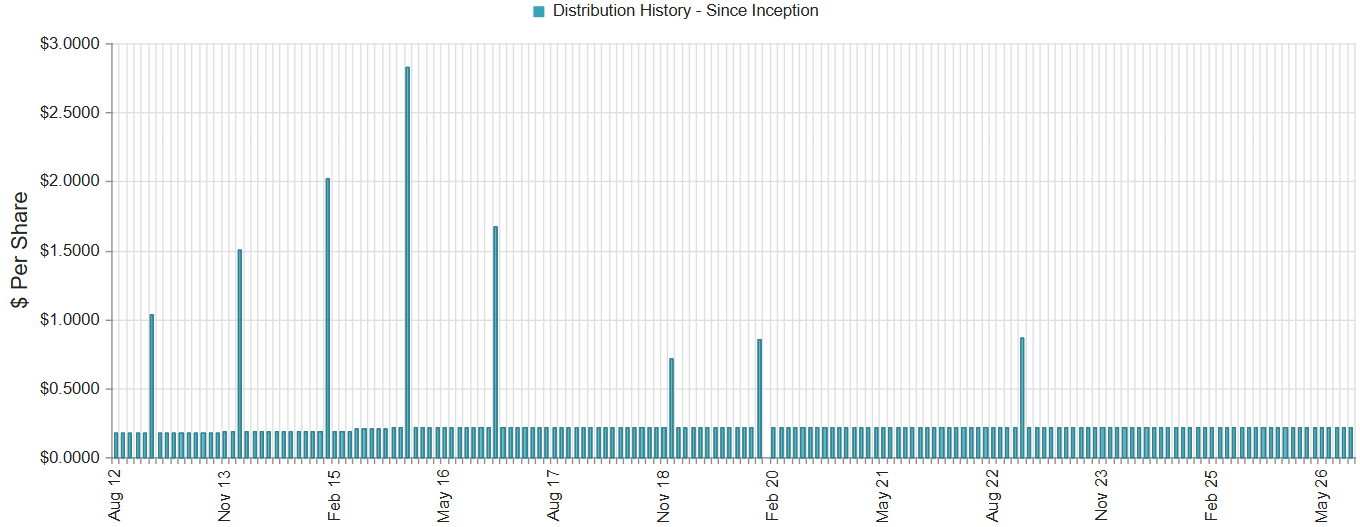
Impressive Track Record: Finally, PIMCO’s track record is impressive. For example, if you have owned PIMCO bond funds for years, you have some appreciation for that steady monthly income, as you can see in the following PDI distribution history chart.
However, it’s also important to consider the risks, as we will cover in the next section.
7 Big PDI Risks
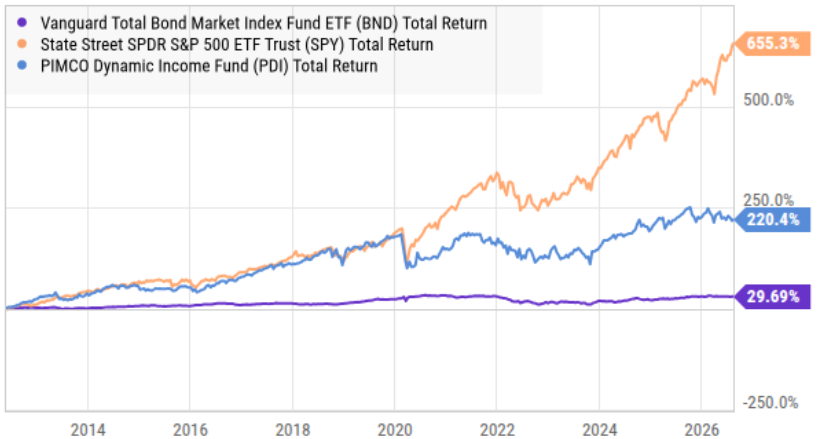
(1) Bond Market Risk: First and foremost, it is important to understand PDI is predominantly a bond market fund, and that brings unique bond market risks. For example, bond market returns have not kept pace with stock market returns over the years.
However, that is completely okay as long as it’s consistent with your goals. Specifically, bonds can bring a lot less volatility and a lot more steady income—which is exactly what many income-focused investors want. Just make sure that PDI’s objectives (see below) are consistent with your own personal objectives as an investor. As per PDI’s website:
“Offering access to PIMCO’s best income-generating ideas across multiple global fixed income sectors, the multi-sector fund seeks current income as a primary objective and capital appreciation as a secondary objective.”
Other bond market risks to keep on your radar include credit risk (PDI is a multi-sector fund with exposure to many sectors, including allocations to riskier high-yield sectors, for example).
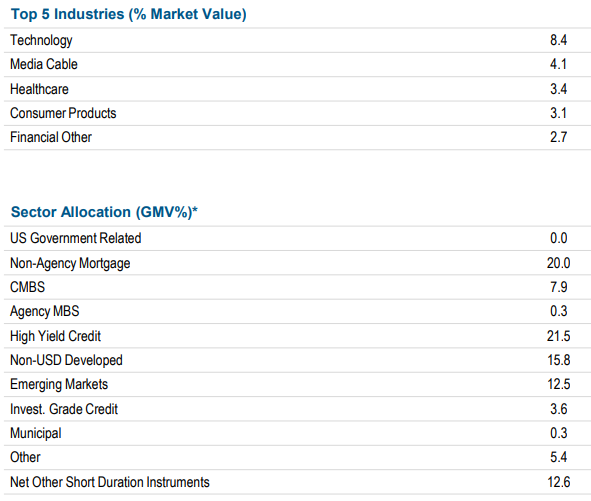
And PDI also has interest rate risk to look out for. Specifically, with a recent duration of 4.77 years (and a stated guideline that the fund will normally maintain an average portfolio duration of between zero and eight years), if rates rise—the value of PDI will fall (and vice-versa) all else equal. Just something to be aware of.
(2) Leverage Risk: PDI uses leverage (or borrowed money) and that is a risk factor investors need to be aware of. Leverage can magnify returns and income in the good times, but it can also magnify declines when things turn south. PDI recently has a leverage ratio of over 30%, which is higher than many bond funds, but still lower than it has been for PDI historically (it has frequently—and for extended periods of time—exceeded 40% throughout its history). As an investor, you need to make sure you are comfortable with the risk (after all, leverage is a big part of the reason this fund is even able to pay such large distributions to investors).
(3) Fees and Expenses: Fees and expenses are another risk investors need to keep on their radar, because anything a fund pays in fees and expenses ultimately comes out of your bottom line. For perspective, PDI’s management fee was recently 1.1% which is high for a bond fund (but arguably acceptable considering you get PIMCO’s active management expertise combined with access to bond markets you cannot easily access on your own).
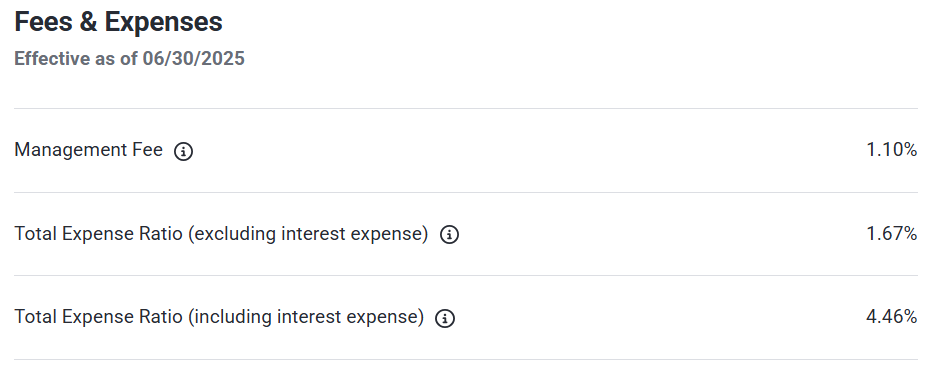
However, the fund’s total expense ratio was recently 1.67%—which is actually quite a lot. And the fund’s total expense ratio—when you add in the cost of leverage—jumps to 4.46%. A number that large scares many investors away from PDI very quickly, but considering what it actually consists of (management fees, expenses, and the cost of leverage) it’s not completely unreasonable for this strategy (you just need to be aware of it as an investor).
(4) Distribution Sources: This risk factor often raises arguments and debates among investors because it can be a bit complex at times. However, it is important to realize that the big monthly distributions paid by PDI are not sourced entirely from interest payments on the underlying bonds it holds (although that is a big part of it). More comprehensively, PDI (and closed-end funds in general) can fund distributions with dividends and interest (on securities they hold), capital gains (both long-term and short-term, which can impact the taxes you may owe), and return of capital (basically, funds sometimes return some of your original investment dollars as part of the distribution payout to help support its large size). You can see how well (or not well) PDI has been covering it’s distribution with investment income (basically dividends and interest plus capital gains) in the following table, as compared to other popular PIMCO closed-end funds.
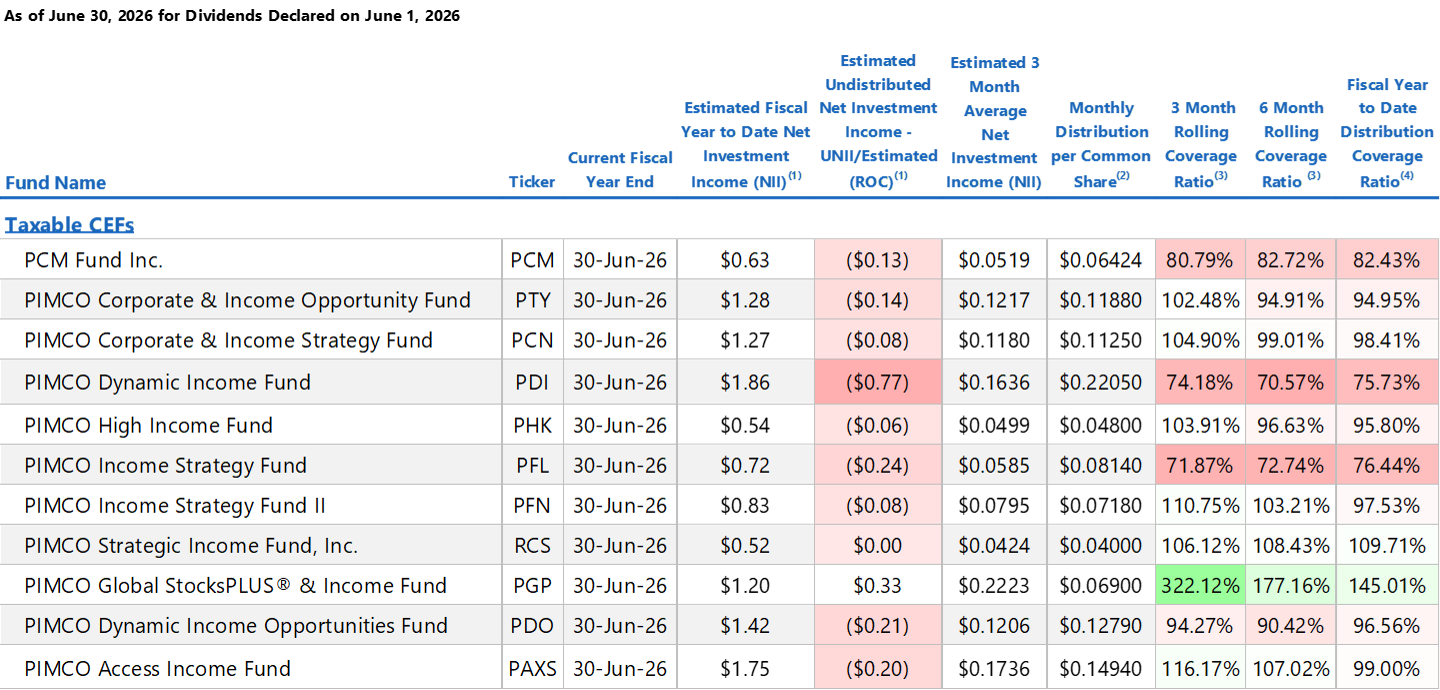
PDI’s relatively low distribution coverage (as shown in the table above) is a risk factor because it suggests the fund must either support the large distributions with somewhat controversial sources (such as “return of capital”) or perhaps eventually reduce the large distribution payouts (more on PIMCO’s defenses against this risk later).
For a little more perspective, PDI’s latest Section 19(a) Notice estimates 37.56% of the current distribution comes from “Paid-in Surplus or Other Capital Sources” which PIMCO describes as “may be economically similar to Return of Capital” in the following table and quote, emphasis mine).
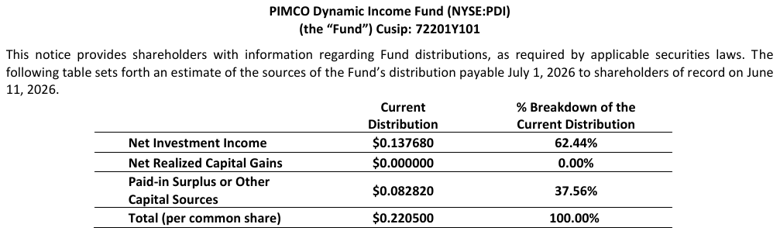
“Although accounted for in the Fund’s internal tax accounting records as income, certain gains from paired swap transactions are included within Paid-in Surplus or Other Capital Sources in the table above in light of the corresponding capital losses associated with such transactions as described above. Consequently, common shareholders may receive distributions and owe tax at a time when their investment in the Fund has declined in value, which tax may be at ordinary income rates and which may be economically similar to a taxable return of capital.”
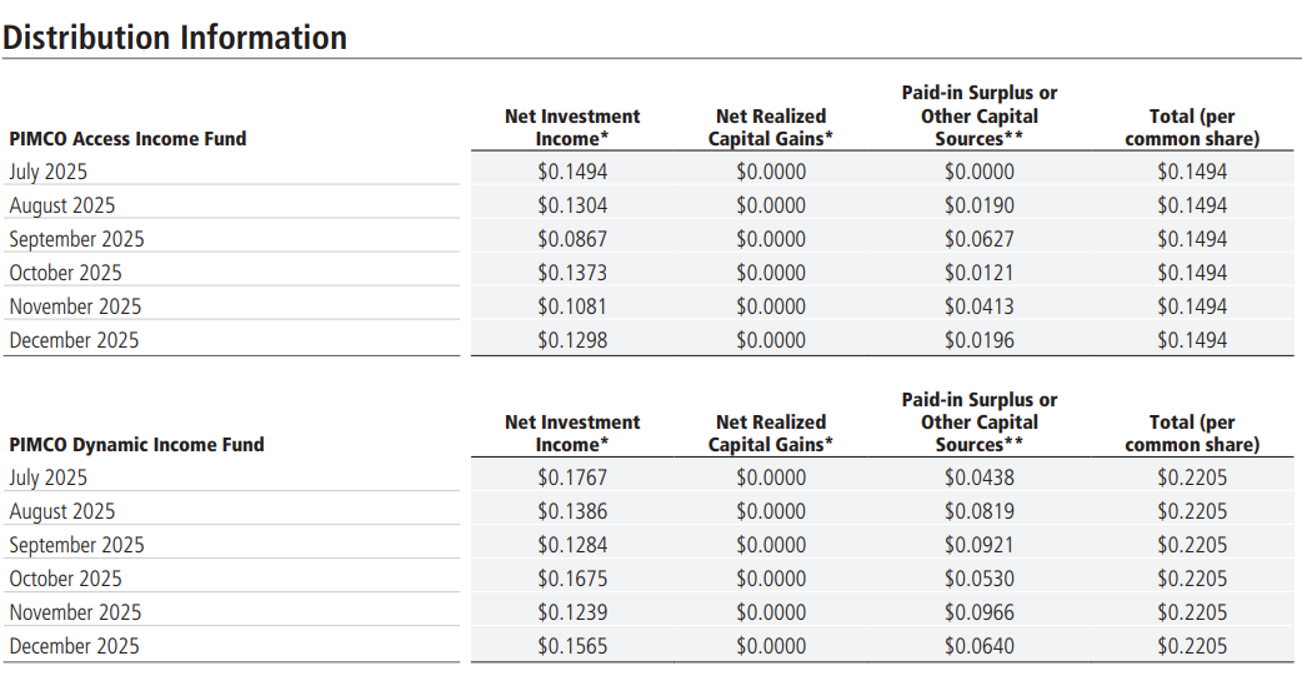
You can see in this next table (from PDI’s semiannual report), the “Paid in Surplus or Other Capital Sources” has been significant in recent years.
(5) Derivatives: PDI’s heavy use of derivative instruments (such as interest rate swaps) adds another layer of risk to the strategy. For example, among PDI’s largest holdings, are USD interest rate swaps (i.e. SOFR = Secured Overnight Financing Rate), as you can see among the top holdings as listed on CEF Connect (also available on PIMCO’s website).
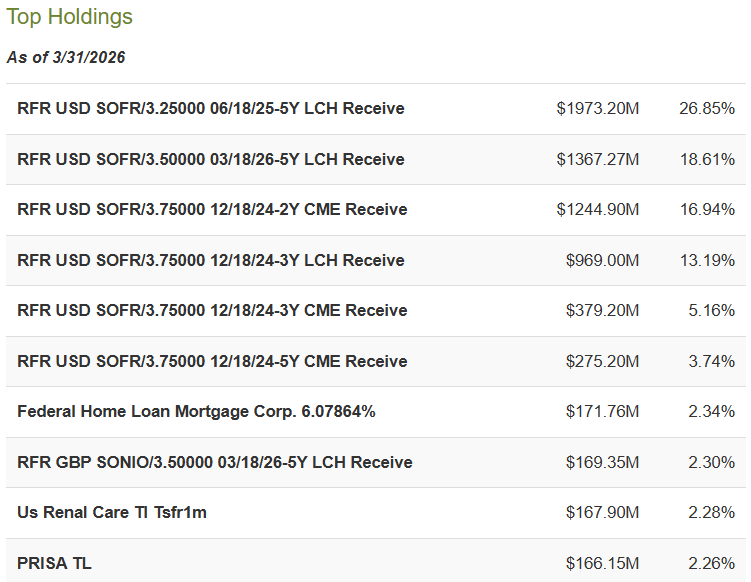
PDI has been using heavy interest rate swaps (derivatives) which may effectively avoid reporting large “return of capital” as a major distribution source (which is something many income investors loathe) despite the fact that PDI does have significant “Tax Basis Return of Capital” in recent years (see table below) from the semiannual report.
(Note: PDI= PIMCO Dynamic Income Fund).
(6) Total Returns vs Distribution Income: Another risk investors should be aware of is that even though PDI has maintained consistent big monthly income payments to investors (which is the only thing some investors care about), the fund does also experience price volatility (which can detract from total returns). To oversimplify, even if PDI yields 16%, if the price declines 3% per year on average, then your total return on PDI may be closer to 13% (i.e. 16% distributions - 3% price declines) depending on whether or not you are reinvesting the distributions. This is another risk factor to keep on your radar.
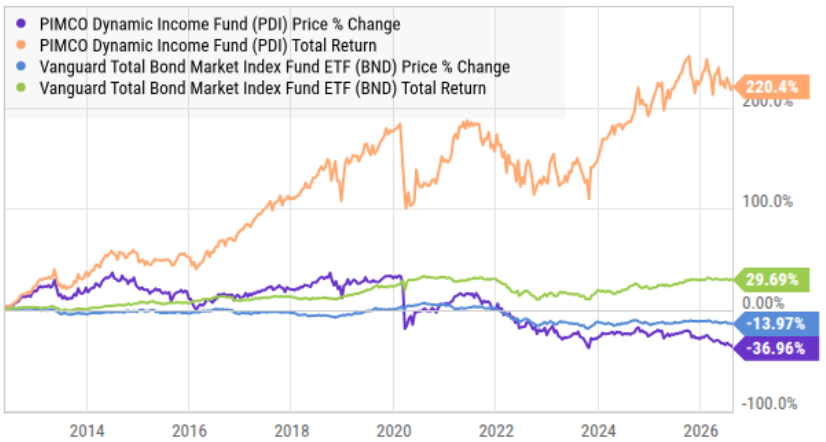
For perspective, the chart above shows PDI’s long-term total returns versus price returns, and also compares that to a passive bond market fund from Vanguard (BND). The PIMCO fund’s price has declined more, but when you factor in the distributions (BND only yields around 4%), PDI outperforms by a wide margin.
(7) Price vs NAV Discounts/Premiums: Because PDI is a closed-end fund (“CEF”) the shares can trade at significant premiums (and sometimes discounts) as compared to the underlying holdings within PDI (i.e. the net asset value or “NAV”). This is different than mutual funds and exchange traded funds which typically trade at (or very close to) their NAV. And this premium/discount volatility is a risk factor PDI investors should monitor because it can impact your total returns over time depending on what price you buy it at (relative to NAV).
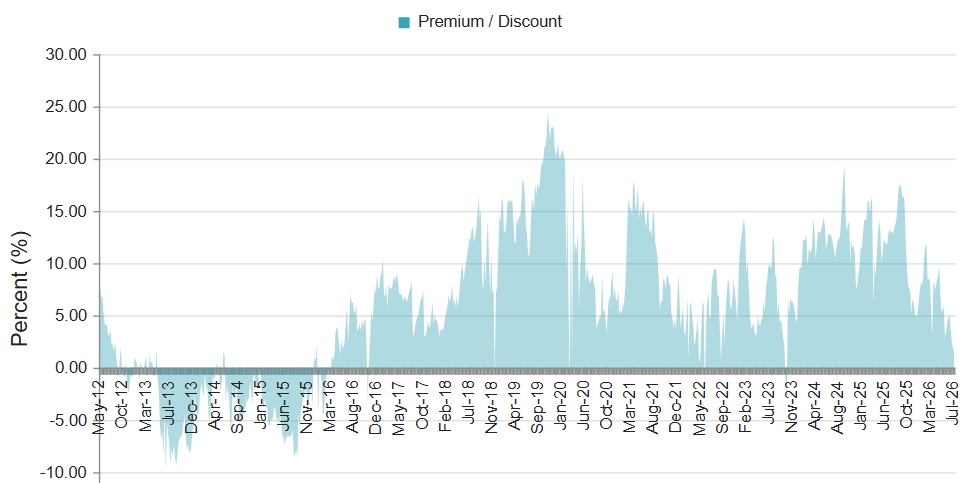
Some investors prefer to buy at a discount and not a premium, but in PDI’s case it trades at a premium more often than a discount (it just happens to be trading at a smaller premium now than is typical, as per the negative z-scores in the table below).
| Ticker | Yield | Disc/Prem | Leverage | Price % of 52W Avg |
Chart | Mkt Cap | Freq | Strategy | ZScore 1Yr |
ZScore 3M |
ZScore 6M |
|---|
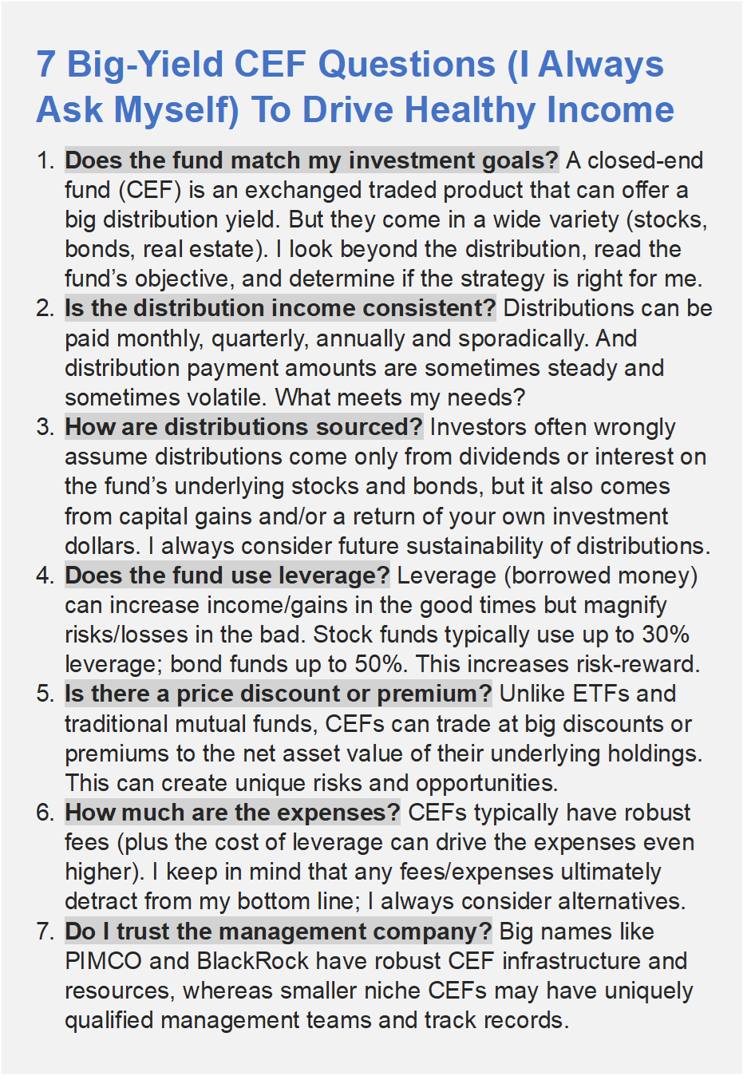
And for reference, here is a summarized list of things I always like to consider before investing in any big-yield CEF.
5 Clever Strategies to Defend the Big Yield
Despite the risk factors (particularly the low distribution coverage ratio, heavy use of derivatives, and declining NAV since inception) PIMCO does have some clever (and often overlooked) strategies in its hip pocket that it can use to defend, support and maintain PDI’s very large distribution yield. Here are five of them:
(1) Issuing More Shares at a Premium: A lot of investors automatically assume if a fund is trading at a premium to its NAV that must be a bad thing (why would you pay more than a fund is worth as per its NAV). However, when PDI trades at a premium (almost always) that actually creates a distinct advantage for current PDI investors (and the larger the premium—arguably the better).
In particular, when PDI trades above its NAV, PIMCO has the ability (and track record—see semiannual report table below) to issue more shares at market price—even though it only costs them NAV to create the shares. Therefore issuing more shares (at a premium) instantly creates extra cash that can be used to support the distribution. Many other fund companies wish they had the brand name of PIMCO so they could also issue more shares at a premium to NAV, but it is a characteristic few CEFs enjoy—and PIMCO is able to maintain it like no other.
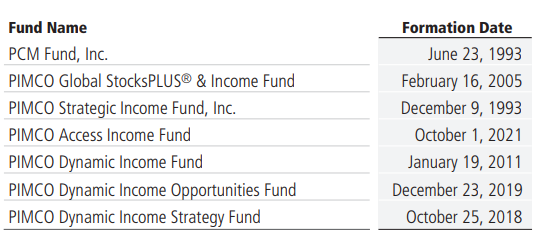
(2) Consolidation (Using Other PIMCO Funds to Cover PDI’s Bath): If the big steady distribution that PDI investors love so much gets stretched too thin, PIMCO has the ability (and track record) of consolidating multiple big-yield bond funds to obscure the real pain of a distribution right-sizing. For example, at the end of 2021, PIMCO combined three large closed-end funds (PCI, PKO and PDI) into one fund: PDI.
The curious part of that merger is that the largest fund at the time—the one with the highest yield of the three (PCI)—was merged into the second largest with the second largest yield (PDI), and this seems to have allowed PIMCO to reduce the distribution on PCI but hide it from investors through a survivorship bias (i.e. PCI doesn’t exist anymore, only PDI and PDI’s dividend wasn’t cut). Considering how much PDI’s yield has mathematically risen since that time, PIMCO could be incentivized to do this again, perhaps merging PDI into PAXS (PAXS is a newer PIMCO bond fund with an attractive but lower distribution yield).
(3) Dry Financial Powder (Interest Rate Swaps and Leverage): Even though PDI has not been covering its distribution with investment income (as we saw in the earlier table) it still has some wiggle room left to avoid a distribution rightsizing. For example, the fund was recently using only 31% leverage (according to CEF Connect), whereas it has historically used more—at times nearly 50% leverage. This means if the fund is having trouble covering the distribution, it can increase the leverage ratio to further magnify the yield—and help maintain the payout.
Also, PDI can continue to use derivative instruments, such as paired swap transactions (which are recorded as “income” in the fund’s internal tax accounting records—even though they may be economically similar to a taxable return of capital, as discussed earlier) to help maintain the big distribution payouts to shareholders. Just know this strategy may not be sustainable indefinitely (because it can weaken NAV—which ultimately weakens the fund’s ability to generate the same level of income in the future).
(4) Bond Price Appreciation: According to recent data, the underlying holdings in PDI are trading below the standard $100 par value (recent data shows PDI’s holdings average $89.29). This means, if PDI is able to hold many of these bonds to maturity then they will produce capital gains (which counts as investment income and can be used to help support the distributions). This is an underappreciated fund characteristic versus bond funds from other firms (such as BlackRock’s BTZ with holdings trading much closer to $100 par value—recently $98.66).
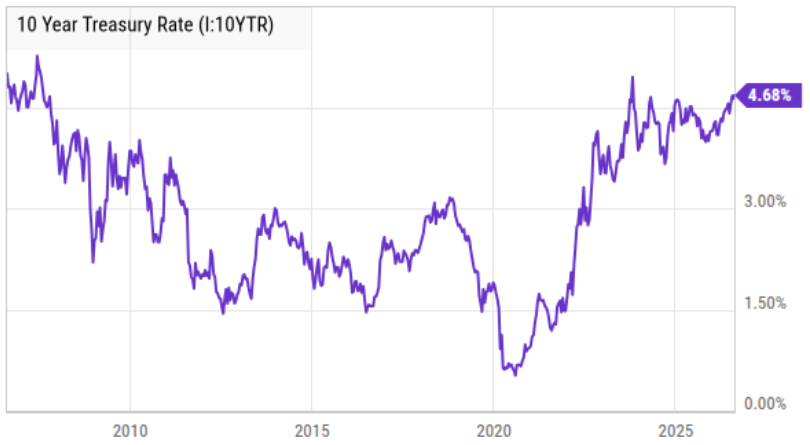
(5) Interest Rates May Rise: This may sound like a bad thing (because rising rates means falling bond prices—all else equal), but higher rates will make it easier for PDI to pay its own high distribution rate (if it is able to purchase bonds offering higher yields). Further still, rising rates (which have already been happening recently—see chart below) can have a negative immediate impact on prices—even though if held to maturity they may rise back to $100 par value (as described earlier) thereby generating investment income to help cover the distribution yield.
The Bottom Line:
If you are a long-term pure-growth investor—don’t invest in PDI. It is absolutely not for you. You are not going to “get it.” Please move on.
If you are an income-focused investor, that understands the risks, and believes in the management company (PIMCO), then PDI is absolutely worth considering.
Personally, I do believe PIMCO will find a way to keep generating big monthly income (one way or another), and I will continue to enjoy the big monthly distributions.
I am long shares of PDI (as one of 22 positions) in my prudently-diversified, long-term, income-focused portfolio.
And at the end of the day, you need to do what is right for you, based on your own personal situation. Disciplined, goal-focused, long-term investing continues to be a winning strategy.