
Google: Despite Capex Fears, All Roads Lead to One Place
Watching Alphabet (GOOGL) shares sell off after earnings because the market fears massive future capital expenditure guidance is a little like watching reruns of Who Wants to Be a Millionaire. No one wants to sit through a few quarters of heavy spending, but they all become fair-weather fans after the stock eventually announces blowout earnings and the buy-low opportunities are significantly over.
More importantly, the hundreds of billions of dollars in AI capital expenditures being forecast by hyperscalers—including Alphabet, Meta Platforms (META), Microsoft (MSFT), and Amazon (AMZN)—all ultimately flow to the same handful of suppliers: Nvidia (NVDA) et al.
Alphabet’s Earnings:
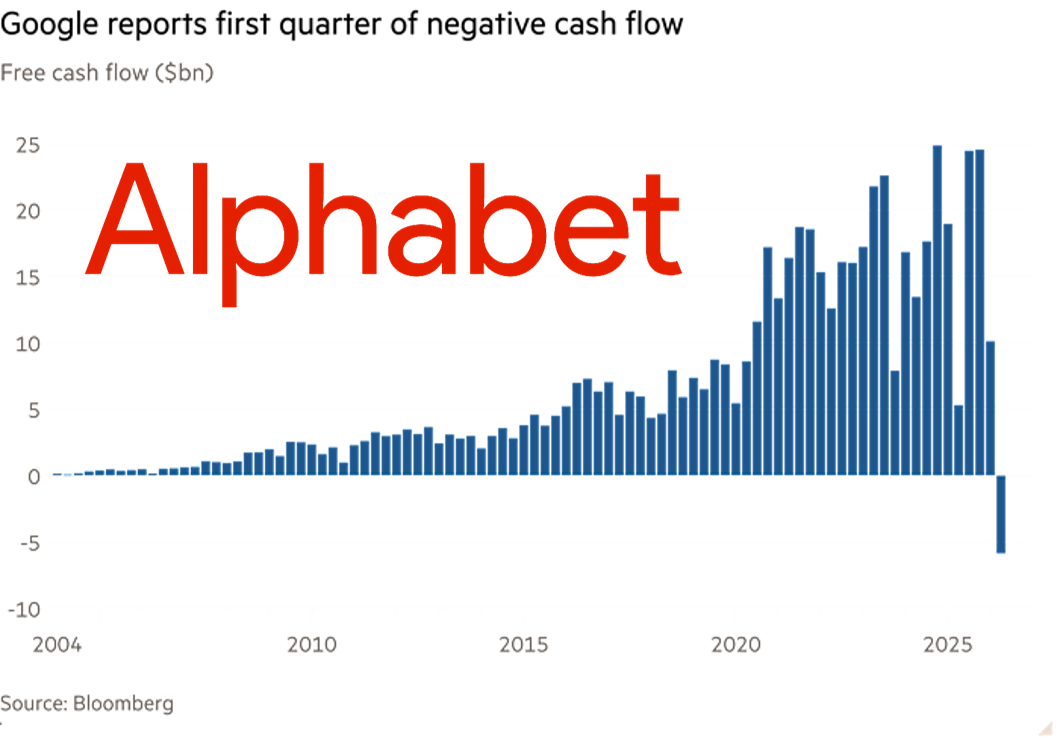
The market's immediate negative reaction to Alphabet's latest results focused almost exclusively on higher capex guidance, with concerns that AI infrastructure spending will pressure free cash flow over the next several years. However, history suggests that periods of elevated infrastructure investment often precede periods of outsized revenue growth. Google is not spending aggressively because its core business is weakening. It’s spending because the AI opportunity is “once-in-a-generation” massive, and the AI race requires building capacity before demand fully materializes.
All Roads Lead to One Place:
However, the even more interesting question is where that money actually goes.
While Google does not disclose a ranked supplier list, the overwhelming majority of AI infrastructure spending is concentrated among a surprisingly small group of companies, with Nvidia sitting right at the top. Specifically, the massive AI capex forecasts will benefit:
Nvidia: AI GPUs and accelerator platforms remain the workhorse of large-scale AI training and inference.
Broadcom (AVGO): Custom AI ASICs, networking silicon, and components supporting Google's TPU ecosystem.
Taiwan Semiconductor Manufacturing (TSM): The foundry manufacturing many of the world's most advanced AI chips.
SK Hynix: Supplier of high-bandwidth memory (HBM), one of the critical bottlenecks in AI hardware.
Vertiv (VRT): Power management, cooling systems, and data-center infrastructure needed to support increasingly power-hungry AI clusters.
In other words, Alphabet's capex isn't primarily funding office buildings or traditional IT infrastructure. It is buying GPUs, custom silicon, networking equipment, advanced memory, servers, power systems, and cooling capacity.
And that observation extends well beyond Google.
Meta recently reaffirmed enormous AI investment plans. Microsoft continues expanding Azure's AI footprint. Amazon remains in the middle of one of the largest data-center buildouts in its history. Collectively, these four hyperscalers are expected to spend well over $300 billion annually on capital expenditures over the coming years.
And although each company competes fiercely in AI services, they share remarkably similar supply chains.
Nvidia

Perhaps the biggest irony is that Nvidia—arguably the largest beneficiary of this AI spending cycle—is still one of the most attractively priced. Not only has it been one of the weakest performing semiconductor stocks this year, its valuation is downright attractive. For example, it trades at only 16x forward earnings and only 0.4x forward PEG. Even if we are being conservative about growth, Nvidia shares are attractively priced, especially considering its software ecosystem, CUDA platform, networking portfolio, and relentless product cadence (i.e. lots of big competitive advantages).
The Bottom Line
Momentum may carry Alphabet (and other hyperscaler) shares lower over the coming corners, but the businesses remains healthy, and the massive capex is a sign of strength not weakness. Rather than spending too much time trying to “time” quarterly stock price moves, these hyperscalers remain great businesses over the long-term (thanks to their leadership positions in the massively disruptive AI megatrend). And if you want to go directly to the beneficiaries of the massive capital expenditures these megacaps are committing to, look no further than the supply chain (as mentioned earlier), especially Nvidia—which remains very attractively priced (still massive upside in the years ahead).